I. 서 론
광개토태왕의 공취성 중에 잡진성이 있다. 섞을 잡자에 보배진 자이다. 뜻으로 풀이하면 보석이 섞여 있는 지역이라는 뜻이다. 그러나 발음상으로 음가차용으로 쓰일 수도 있다.
필자는 우연히 짐바브웨 지역을 살피다가 탄자니아에서 Zanzibar city를 알게 되었다. 발음상으로 잡진성의 잡진과 유사하다. 잡진을 영어로 하면 Zabzin일 것이나 발음 편의상 Zanzib으로 변할 수 있다. 그래서 이 지역에 광개토태왕이 진출하였나 생각하게 되었다.
그리고 이 근처에 모수성의 Mosu river가 있는 것을 알게 되었다. 모수성의 한자는 소머리모와 물수자이다. 즉 소와 관련된 강이라는 것이다. 그래서 Mosu river가 관련된 곳이 아닌가 한다. 이 근처에 소가 있는 Mosu Safari가 있다.
모수성은 광개토태왕이 마한의 백제의 성중에 공취한 성 중의 하나이다. 마한 56개국 중에도 모수국이란 나라가 있다. 한자도 모수성의 모수와 똑같다.
그런데 최근에 아단성에 관한 연구를 하면서, 아단성과 잡진성은 광개토태왕 비문에 나오는 수묘인제가 있는 성이름으로 동시에 언급되며, 간연 10가로 기술되어 있다. 즉 이웃한 성이 아니면 같이 간연 10가로 하기 어려울 것이란 판단이 든다. 그래서 아단성이라 판단되는 튀르키예의 Adana 지역 근처를 살펴 보기 시작했다. 그런데 살피는 중에 가까운 Isauria지역에서 Zangibar castle을 찾아 냈다. Zanzibar와 너무도 유사한 Zangibar이름이다. 그런데 이 성은 아단성과 이웃하고 있으니, 잡진성이 아니겠는가 하는 생각이다. 그래서 이에 대한 연구를 시작하고 이글을 쓰게 되었다.
II. 본 론
1. 광개토태왕이 백제로부터 공취한 잡진성(雜섞을잡, 珍보배진,城)
광개토태왕 비문에 아단성과 잡진성을 함께 언급하며 간연 10가로 한다고 수묘인제에 대해 언급하고 있다. 따라서 잡진성은 아단성과 이웃한 성이 아닌가 한다. 잡진성은 음가차용으로 쓴 이름일 수 있고, 뜻으로 하면 보석이 섞인 성이라는 뜻이 된다. 따라서 필자는 음가차용의 한자로 판단한다. 그러나 이 지역에 보석이 나는 지역일 수 있다고도 판단한다.
필자는 파헤치다 보니, Adana province에 Zangibar castle이 있는 것을 알게 되었다. Zangibar는 잡진이란 발음에 가깝다. 우리말과 서양지역의 지명을 비교하면, 자음이 앞뒤로 바뀌는 현상을 필자는 자주 보았다. 아마도 그들의 언어로 편하게 발음하다 보니 변형된 것이 아닌가 한다.
필자는 과거 동아프리카에 있는 탄자니아의 우측섬에 Zanzibar Castle이 있어 혹시 이곳이 잡진성인가 했었다. 그러나 아단성과 같이 있는 것으로 보이지 않아 판단을 유보하고 있었던 것이다. 오늘은 여기서 이에 대한 의문을 풀고자 좀더 자세히 살펴 보고자 한다.
1) Zangibar castle in Adana province

Zangibar castle in Adana province in Turkey (source : Shutterstock)
"Zengibar Castle is an ancient ruined fortification on Mount Asar, approximately 20 km west of the town of Bozkır, Konya, Turkey.
Zagibar 성은 튀르키예의 Konya, Bozkir타운의 서쪽 20km지점에 있는 Asa 산에 있는 고대 요새 유적이다. (상기 내용)
The castle is believed to be the site of the ancient settlement Isaura Palaea.[1] The ruins are situated on a hill 1,800 meters in height, and surrounded by cliffs on three sides. The ancient site has been called 'The Ephesus of Konya', and the fortress had been used by the Hittites and Persians before the area became a part of the Roman Empire.[2] The site is known for its impressive stonemasonry, with blocks being brought from a quarry at the summit of the mountain.[3]
이 성은 고대 Isaura Palaea의 주거지로 믿어진다. 그 유적은 1800미터 높이의 언덕위에 있는데, 3면이 절벽으로 둘러싸여 있다. 고대의 장소는 'Konya의 Ephesus'로 불리웠으며, 로마제국의 일부가 되기 전에는 히타이트와 페르시아의 요새로 이용되었었다. 이 장소는 인상적인 석조물로 알려졌는데, 산 정상에 있는 채석장에서 돌을 날라 만든 블럭들이 있다. (상기 내용)
(source : Zangibar castle, wikipedia, 인용출처: 필자의 네이버블로그(lainfos), 카테고리, 튀르키예)
상기 내용중에 Zangibar castle은 고대로부터 내려오는 요새라 언급되며, 그 유적은 1800미터 높이에 3면이 절벽으로 둘러싸여 있다 한다. 고구려의 전형적인 성곽 위치의 모습이다.
현재 Zangibar castle에 대한 자료와 모습은 거의 남아 있지 않지만, 이 성이 위치한 Old Isaura (=Isaura Palaea)에 대한 역사를 살펴 보며, 간접적인 연구를 해보자.
2) Isaura Palaea (=Old Isaura)
상기 자료에서 Zangibar castle가 위치한 Isaura Palaea지역은 고대로부터 많은 역사를 품고 있다. 특히 스키타인과 관련된 지역이라 판단되는데, 이에 대해 알아 보자.
"Isaura Palaea (Ancient Greek: Ἴσαυρα Παλαιά, romanized: Isaura Palaia), in Latin Isaura Vetus, both meaning Old Isaura, and perhaps identical to Isauropolis (Ancient Greek: Ἰσαυρόπολις),[1][2] was a Roman and Byzantine era town in southern Turkey.[3] In antiquity the city was in Isauria (Ἰσαυρία) district[4] of Lycaonia in today's southern Turkey (modern Konya Province). Its site is identified as near Bozkır.[2][5]
Isaura Palaea는 라틴어로 Isaura Vetus인데, Old Isaura라는 의미이며, 아마도 Isauropolis와 같으며, 튀르키예 남부의 로마 비잔틴 시기 타운이다. 고대 그리스 로마시기에는 이 도시는 오늘날 남부 터어키의 Lycaonia의 Isauria구역이다. 그 장소는 Bozkir에 가까운 것으로 확인된다. (상기 내용)
Possibly also known as Isaura Vetus, the city was in the Anatolian countryside of what was Lycaonia in today's southern Turkey and may have been the chief town of Isauria (Ἰσαυρία) district.[6] The town was mentioned by Sozomen,[7] Ptolemy,[8] and Heirocles.[9] About 450 Maximinus entered the town in his war with Zeno.[10] Its location is not known, but suggestions include Siristat or Tris Maden, about 13 mi (21 km) west of Isaura, or Isaura Vetus. It must have been near Isaura Nova with which it was joined.
아마도 Isaura Vetus로도 알려졌는데, 이 도시는 현재의 남부 터어키의 Lycaonia의 아나톨리아 시골에 있었으며, Isauria구역의 주요 타운이었을 것이다. 이 타운은 Sozomen, Ptolemy 그리고 Heirocles에 의해 언급되었다. 약 450년에 Maximinus는 Zeno와의 전쟁에서 이 도시에 들어 왔다. 그 위치는 알려져있지 않지만, Isaura 또는 Isaura Vetus의 서쪽 13마일 지점인 Siristat 또는 Tris Maden을 포함한 것으로 제시된다. Isaura Nova가까이였음에 틀림없다. (상기 내용)
The city has been identified with modern Zengibar Kalesi, Bozkır, Konya Province.
이 Isaua Paleae 도시는 현대의 Konya 지방의 Bozkir, Zangibar Kalesi로 확인되었다. (상기 내용)
History (역사)
Before the Romans the town was a strongly fortified city of the Isaurians, located at the foot of Mt. Taurus. It was besieged by Perdiccas, the Macedonian regent after Alexander the Great's death, the Isaurians set the place alight and let it perish in flames rather than submit to capture.[11] Large quantities of molten gold were found afterwards by the Macedonians among the ashes and ruins.[12]
로마시기 이전에 이 타운은 토러스산맥 발밑에 있는, Isaurians의 매우 강력히 요새화된 도시였다. 알렉산더대왕 죽음이후 마케도니언 regent인 Perdiccas에 의해 포위되었었으나, Isaurians은 잡혀 복종되는 것보다 이 지역을 화염속에서 소멸되게 했다. 재와 폐허속에서 마케도니언들은 많은 양의 녹은 금을 발견했다. (상기 내용)
알렉산더 사후 마케도니아의 침략에 매우 강하게 저항했던 역사를 보여 준다. warlike의 모습이 스키타인의 모습을 본 것 같다. 그런데 로마가 이 지역을 점하지는 못하고 아나톨리아의 갈라티언에게 양도했다 한다. (아래 내용 참조)
The town was rebuilt, but was destroyed a second time by the Roman, Servilius Isauricus (c. 75 BCE), and thenceforth it remained a heap of ruins. Strabo states that the place was ceded by the Romans to Amyntas of Galatia.[13] It was rebuilt by Amyntas at a new location and called Isaura Nea ('New Isaura').
이 타운은 다시 건설되었으나, BC 75년 로마 Servilius Isauricus에 의해 두번째로 파괴되었고, 그 이후 폐허더미로 남아 있었다. 스트라보는 이 장소가 로마로부터 Amyntas of Galatia에 양도되었다고 언급한다. Amyntas는 새로운 곳에 다시 건설하여 Isaura Nea (New Isaura)라 불렀다. (상기 내용)
(source : Isaura Palaea, wikipedia, 인용출처: 필자의 네이버블로그(lainfos), 카테고리, 튀르키예)
상기 글에서 Isaura Palaea는 로마로부터 Amyntas of Galatia에게 양도되었다고 스트라보는 말했다 한다. Isaurians은 로마의 직접통치가 불가할 정도로 독립적인 경향이 강하다. 그래서 갈라티아왕 Amyntas에게 양도되었을 것으로 판단된다. 그래서 갈라티아에 대해 좀 더 알아 보자.
3) Galatia in Anatolia
갈라티아는 켈트족으로서 Gaul족(프랑스), Galicia(이베리아 반도 서북부), 그리고 스코틀랜드, 아일랜드의 Gaels족과 관련이 있다. (아래 자료 참조) 필자는 이들이 스키타인과 관련이 있는 것으로 파악한다. 그래서 스키타인 성격의 Isaurians을 Galatia에게 양도한 것은, 같은 스키타인인 점이 고려된 것일 것이다. 또는 스키타인 세력이 로마로부터 독립한 것이거나 로마가 이 지역을 정복하지 못한 것일 수도 있다.
"Galatia was named after the Gauls from Thrace (cf. Tylis), who settled here and became a small transient foreign tribe in the 3rd century BC, following the Gallic invasion of the Balkans in 279 BC. It has been called the "Gallia" of the East, "Gallacia" ultimately deriving from the northwest of ancient Spain.[1]
Galatia는 트라키아의 Gauls족 이름을 따라서 지은 것이다. 트라키아 골족은 BC 279년 발칸지역 침범이후, 이 지역에 정착한 기원전 3세기의 조그만 외국 이주민 부족이었다. 이 지역은 동쪽의 Gallia, Gallicia라 불렸는데, 이는 고대 스페인의 북서쪽으로부터 연유된 이름이다. (상기 내용)
(source : Galatia, wikipedia, 인용출처 : 필자의 네이버블로그(lainfos), 카테고리, 아나톨리아)

Celts in Europe (source : Wikipedia)
필자는 웨일즈지역의 광개토태왕 공취성에 관한 글을 썼을 때, 이들 Gael족이 스페인 서북부에 진출하였다는 위키피디아 기술을 살펴 보았다. 이 스페인 서북부에 광개토태왕의 비문에 나오는 사조성, Sae Jorge Castle이 있다.
......
By the 4th century BC, the Celts had penetrated into the Balkans, coming into contact with the Thracians and Greeks.[6] In 380 BC, they fought in the southern regions of Dalmatia (present day Croatia), and rumors circulated around the ancient world that Alexander the Great's father, Philip II of Macedonia had been assassinated by someone using a dagger of Celtic origins.[7]
기원전 4세기까지 켈트족은 발칸에 침투하여 그리스와 트라키언과 접촉하게 된다. 기원전 380년, 그들은 달마티아의 남부지역(현재의 크로아티아)에서 싸웠으며, 당시 고대사회에 소문이 돌기를, 알렉산더대왕의 아버지인 마케도니아의 Phillip II는 켈트족 오리진의 단검을 사용하는 누군가에 의해 살해되었다 했다. (상기 내용)
마케도니아의 Phillip II를 살해한 켈트족 오리진의 단검을 사용한 자는 스키타인으로 추정할 수 있다. 위에서 알렉산더대왕에게 맹렬히 저항한 모습도 필자는 스키타인의 모습이라 했다.
......
Roman Galatia
Upon the death of Deiotarus, the Kingdom of Galatia was given to Amyntas, an auxiliary commander in the Roman army of Brutus and Cassius who gained the favor of Mark Antony.[14] After his death in 25 BC, Galatia was incorporated by Augustus into the Roman Empire, becoming a Roman province.[15] Near his capital Ancyra (modern Ankara), Pylamenes, the king's heir, rebuilt a temple of the Phrygian god Men to venerate Augustus (the Monumentum Ancyranum), as a sign of fidelity. It was on the walls of this temple in Galatia that the major source for the Res Gestae of Augustus were preserved for modernity. Few of the provinces proved more enthusiastically loyal to Rome.
Deiotarus가 죽자, 갈라티아 왕국은 Amyntas에게 주어졌는데, Amyntas는 Mark Antony의 혜택을 입은 Brutus와 Cassius 로마군의 부사령관이었다. BC 25년 그가 죽자, 갈라티아는 로마제국의 아우구스투스 황제에 편입되어 로마제국 지방이 되었다. 수도 Ancyra (현재의 앙카라) 근처에, 왕의 후계자 Pylamenes는 Augustus황제에 대한 충성의 표시로서 프리기아의 신 Men의 신전을 다시 세웠다. 갈라티아의 이 신전의 벽에 Augustus의 Res Gestae(공적을 적은 내용)에 대한 주요 자료가 현대적으로 보관되어 있다. 로마에 이보다 더 충성스러운 지방은 거의 없었다. (상기 내용)
스키타인의 모습은 프리기언의 모자(Phrygian cap)를 쓴 모습으로 곧장 나타난다. 상기 글에서 프리기아의 신 Men의 신전을 세웠다는 것은 갈라티아인도 스키타인이라는 것을 암시한다고 본다.
Josephus related the Biblical figure Gomer to Galatia (or perhaps to Gaul in general): "For Gomer founded those whom the Greeks now call Galatians, [Galls], but were then called Gomerites."[16] Others have related Gomer to Cimmerians.
조세푸스는 성서에 나오는 Gomer를 Galatia (또는 아마도 일반적으로 Gaul)에 연관시켰다 : 왜냐하면 Gomer는 그리스인이 Galatians(Galls)라 부르는, 그때에는 Gomerites라 불리는 사람들의 창시자였기 때문이다. 다른 이들은 Gomer를 키메리언과 연관시킨다. (상기 내용)
즉 Gomer가 갈라티언이고 키메리언이라는 것이다. 즉 터어키의 갈라티언은 스키타인의 일종인 키메리언이라는 것이다. 필자의 추정, 아나톨리아의 Galatians, Isaurians이 스키타인이 아닌가 하는 추정과 궤를 같이 한다.
....
Although originally possessing a strong cultural identity, by the 2nd century AD, the Galatians had become assimilated (Hellenization) into the Hellenistic civilization of Anatolia.[18] The Galatians were still speaking the Galatian language in the time of St. Jerome (347–420 AD), who wrote that the Galatians of Ancyra and the Treveri of Trier (in what is now the Rhineland) spoke the same language (Comentarii in Epistolam ad Galatos, 2.3, composed c. 387).
원래 강력한 문화적 특성을 가졌지만, 기원후 2세기에 이르러, 갈라티언은 아나톨리아의 헬리니즘문화에 동화되었다. 갈라티언은 아직 St Jerom (347-420 AD)시기에 갈라티언어를 말하였다. 성 제롬은 앙카라의 갈라티언과 Trier의 Treveri (지금의 Rhineland)가 같은 언어를 말하고 있다고 기술했다. (상기내용)
In an administrative reorganisation (c. 386–395), two new provinces succeeded it, Galatia Prima and Galatia Secunda or Salutaris, which included part of Phrygia. The fate of the Galatian people is a subject of some uncertainty, but they seem ultimately to have been absorbed into the Greek-speaking populations of Anatolia."
행정적 조직의 조정 (386-395)에서, 새로운 두 지방이 되었는데, Galatia Prima와 Galatia Secunda or Salutaris가 그것이며, 후자는 프리기아의 일부를 포함하였다. 갈라티아 사람들의 운명은 확실하지 않으며, 궁극적으로 아나톨리아 그리스말 하는 사람들에게 흡수되지 않았나 한다. (상기 내용)
(source : Galatia, wikipedia, 인용출처 : 필자의 네이버블로그(lainfos), 카테고리, 아나톨리아)
상기 Galatia 행정조직이 386-395기간동안 갑자기 2개로 나뉘는 것이 이상하다. 이 시기가 훈족(광개토태왕)이 이 지역에 진출하는 시기이기 때문이다. 즉 스키타인 지역인 갈라티아와 Isauria지역에 광개토태왕이 공취한 잡진성이 있는 것이다.
이제 다시 Isaura Paleae (Old Isaura)에 대한 검토로 돌아가면, 492-496기간동안 로마와 Isaurian war를 하였다 아래 기술된다.
그러나 Isaurian war에 대해서는 장수왕 시기의 아단성 연구에서 더 살펴 보기로 하고, 여기서는 Isaurians이 스키타인인가에 대해 실펴 보는 것으로 마치고자 한다.
4) Isauria
5세기말에 Isaurian war라 명명될 정도로 로마에 크게 대항한 지역이다. (아래 자료 참조).
"From 492-496 the area was fought over between emperor Anastasius I and the local rebels, in what was to become known as the Isaurian War."
492-496년기간 이 지역은 로마의 Anastasius I황제와 지역 반란군사이에 전쟁이 있었는데, 이것이 Isaurian War라 알려진 것이다. (상기 내용)
(source:Isaura Palaea, wikipedia, 인용출처: 필자의 네이버블로그(lainfos), 카테고리, 튀르키예)
그런데 이 시기에는 고구려의 영역이었을 수도 있다. 아단성을 중수한 장수왕의 언급이 있으니, 아단성이 이웃에 있는 이 잡진성 지역은 고구려의 영역으로 계속 남았을 것이다. 그래서 Isaurians의 강한 독립심이 어떤 특징을 가졌는지 좀더 알아 보고자 Isaurians에 대해 알아 보자.
"Isauria (/aɪˈzɔːriə/ or /aɪˈsɔːriə/; Ancient Greek: Ἰσαυρία), in ancient geography, is a rugged, isolated district in the interior of Asia Minor, of very different extent at different periods,[1] but generally covering what is now the district of Bozkır and its surroundings in the Konya Province of Turkey, or the core of the Taurus Mountains. In its coastal extension it bordered on Cilicia.
Isauria는 고대 지리에서 소아시아내의 고립된 구역인데, 시기에 따라 지역이 다른데, 일반적으로 지금의 Bozkir구역과 튀르키예 Konya 지방 또는 토러스 산맥의 핵심부분 주위를 말한다. 해안으로는 Cilicia까지 접하게 된다. (상기 내용)
It derives its name from the warlike Isaurian tribe and the twin settlements Isaura Palaea (Ἰσαυρα Παλαιά, Latin: Isaura Vetus 'Old Isaura') and Isaura Nea (Ἰσαυρα Νέα, Latin: Isaura Nova 'New Isaura').
Isauria이름은 전투적인 Isaurian 부족으로부터 비롯되며, 두 주거지 Isaura Paleae (Old Isaura)와 Isaura Nea (New isaura)이름부터이기도 하다. (상기 내용)
The Isaurians were fiercely independent mountain people who marauded and created havoc in neighboring districts under Macedonian and Roman occupations.
Isaurians은 매우 극렬하게 독립적인 산에 사는 사람들이었으며, 마케도니아와 로마제국 땅 이웃지역을 약탈하고 큰 피해를 주었다. (상기 내용)
즉 Isaurians은 매우 전투적이며, 독립적인 부족이며, 산의 성채에 사는 사람들이라고 언급한다.
...............
History
The Isaurians were brought partially under control (76–75 BC) by the Romans. During the war of the Cilician and other pirates against Rome, the Isaurians took so active a part that the proconsul P. Servilius deemed it necessary to follow them into their rugged strongholds, and compel the whole people to submission, an exploit for which he received the title of Isauricus (75 BC).[1]
Isaurians은 부분적으로 로마의 지배 (76-75 BC)하에 있었다. Cilician war시기에, 로마에 대항한 다른 해적과 Isuarians은 아주 적극적인 역할을 해서, P Servilus Proconsul은 바위투성이의 그들 진지까지 추적하여 모든 주민들이 항복하도록 하게할 필요가 있었으며, 이러한 공으로 그는 Isauricus라는 타이틀을 받았다. (상기 내용)
Isaurians은 해양활동이 활발한 부족이라는 것이다. sea peoples과 스키타인의 모습이 보인다.
In the year AD 6, Cassius Dio mentions that the Isaurians were marauding through the province of Asia until they were faced with open war and were defeated.[3]
AD 6년에 Cassius Dio는 언급했다 : Isaurians은 아시아의 지방들을 약탈하여 전쟁에 부딪혔고 패배했다. (상기 내용)
The Isaurians were afterwards placed for a time under the rule of Amyntas, king of Galatia; but it is evident that they continued to retain their predatory habits and virtual independence. In the 3rd century they sheltered the rebel emperor Trebellianus.[1]
Isaurians은 후에 Galatia왕 Amyntas의 지배하에 놓였다; 그러나 그들은 그들의 과거 관습을 지키고 겉보기에 독립을 유지했다. 3세기에 그들은 반란한 황제 Trebellianus에게 피난처를 제공했다. (상기 내용)
Isaurians은 Galatia왕 지배하에 있었지만 실질적 독립을 유지한 것이라는 것이다. 그리고 3세기에 Isaurians 출신 황제에게 피난처도 제공했다. 이는 독립적인 위치가 아니면 불가능하다.
In the early 4th century, all Cilicia was detached by order of Diocletian for administrative purposes from the northern slope of Taurus. A province called at first Isauria-Lycaonia, and later Isauria alone, extended up to the limits of Galatia, but not past Taurus on the south. Pisidia, part of which had hitherto been included in one province with Isauria, was also detached, and made to include Iconium; Isauria received the eastern part of Pamphylia.[1] The coastal Metropolis of Seleucia was designated as Isauria's provincial capital.[4]
4세기초에, 디오클레티언의 명에 의해 모든 Cilicia는 행정관리적 목적으로 토러스의 북쪽 경사지로부터 분리되었다. 처음에는 Isauria-Lycaonia, 나중에는 Isauria로 불린 지방은 갈라티아의 경계까지 그러나 토러스 남쪽을 지나지는 않는 지역까지 확대되었다. Isauria의 한 지방의 일부로 포함되었던 Pisidia 지역 역시 분리되었고 Iconium에 포함되도록 했다; Isauria는 Pamphylia의 동쪽 부분을 얻었다. (아래 지도 참조). 해안의 Seleucia Metropolis는 Isauria 지방의 수도로 정해졌다. (상기 내용)
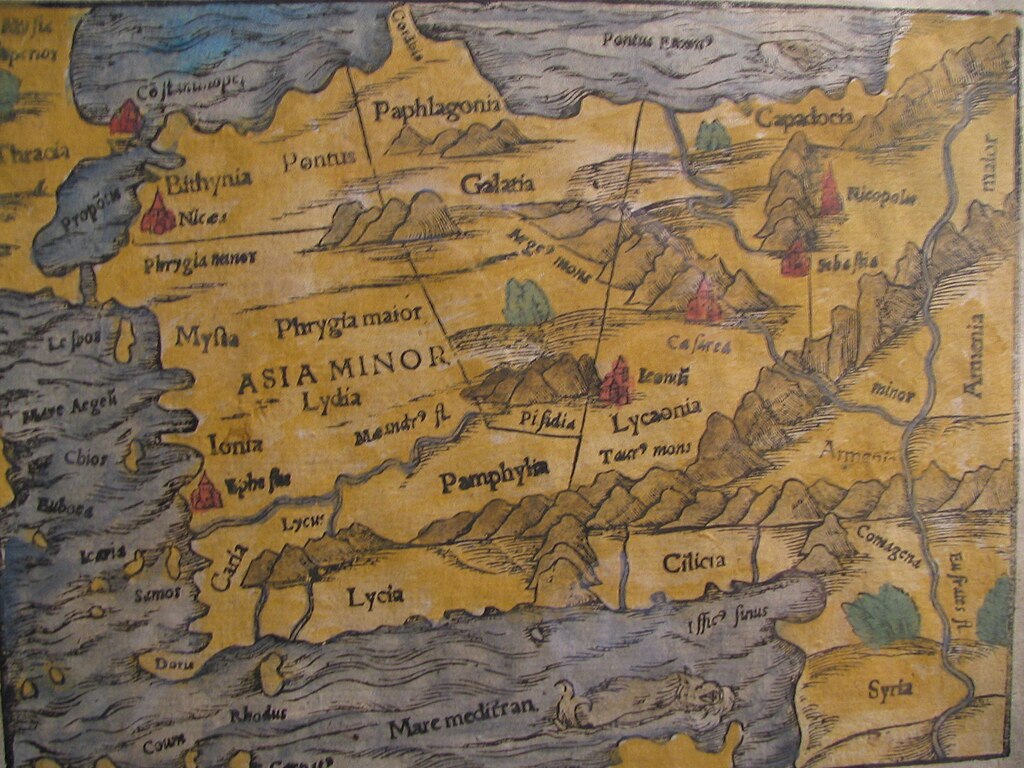
15세기의 튀르키예 지도 (자료 : 위키피디아)
In the 4th century they were still described by Ammianus Marcellinus as the scourge of the neighbouring provinces of Asia Minor, with a major series of raids occurring from AD 404 to 409, including one campaign to eradicate them led by the Eastern Roman general Arbazacius, but they were said to have been effectually subdued in the reign of Justinian I.
4세기에 Isaurians은 소아시아 이웃지방의 골칫거리로 Ammianus Marcellinus에 의해 묘사되었다. 404-409년동안 주요 습격의 연속이었는데, 동로마 장군 Arbazacius에 의해 이끌어진 (이들을 근절하는) 원정도 포함된다. 그러나 그들은 Justinian I 통치시기에 효과적으로 복속되었다 말해진다. (상기 내용)
(source : Isauria, wikipedia, 인용출처: 필자의 네이버블로그(lainfos), 카테고리, 로마제국 (364-500))
상기 404-409년기간은 고구려의 광개토태왕이 적극적으로 원정활동을 하는 시기이다. 이 시기의 Isaurians은 고구려의 세력으로 동로마군의 장군과 전쟁했는지도 모른다. Isaurians이 비잔틴제국의 Justinian I시기(백제 성왕 추정)에 효과적으로 복속되었다는 것은, 로마가 그전의 전투에서 Isaurians에 승리하지 못했다는 의미이다. 그래서 장수왕 시기까지 아단성이 고구려의 지역으로 남아있는 것이 아닌가 한다.
5) General Arbazacius' campaign in Isauria (404)
상기 404-409년 시기의 습격의 연속이란 표현은 좀 더 살펴볼 가치가 있다. 이 지역에 대한 고구려 광개토태왕의 정복과 관련 있을 수 있기 때문이다. 그리하여 404년 Isauria에 원정한 동로마 Arbazacius 장군에 대해 좀 더 살펴 보자.
"Arbazacius (Greek: Ἁρβαζάκιος, fl. early 5th century) was an Eastern Roman general who pacified Isauria during the reign of Emperor Arcadius (r. 383–408).
Arbazacius (5세기초)는 동로마장군으로서 Arcadius 황제(r 383-408) 통치시기에 Iauria를 진압한 장군이다. (상기 내용)
Biography
Arbazacius is usually described as being born in Armenia from an Isaurian family, but it has also been argued that he was born in Isauria and was of Armenian descent.[1][2][3] Around 404 AD, with Isaurian raiders beginning their raids into southern and eastern Asia Minor,[4] Arbazacius was placed in command of the Roman forces with instructions to clear Isaurian brigands from Pamphylia. Although the exact nature of his appointment remains unknown, it has been speculated that he held the rank of comes rei militaris.[5]
Arbazacius는 일반적으로 아르메니아 Isaurian 가족에서 태어난 것으로 묘사된다. 그러나 Isauria태생, 아르메니언 자손이라는 것에 대해 논란이 있다. 약 404년에, Isaurian 공격이 남부와 동부 소아시아에서 시작할 때, Arbazacius는 로마군의 지휘를 맡아 Pamphylia지방의 Isaurian 산적들을 소탕하라는 지시를 받았다. 그의 임명의 정확한 형상은 알려지지 않았지만, 그는 comes rei militaris지위를 가진 것으로 추측되었다. (상기 내용)
Arbazacius managed to defeat the brigands, pursuing them back to their mountain homelands in Isauria, where he proceeded to destroy a large number of their villages, killing many Isaurians in the process. His campaign in Isauria saw him accumulate a great deal of booty, but instead of continuing the pacification of their homelands, he used the spoils to live a life of luxury, and attempted to increase his wealth by extracting more money from the population.[2] When word reached the imperial court at Constantinople, he was recalled to answer questions about his conduct. Arbazacius managed to avoid trial by bribing the empress Aelia Eudoxia, after which he lived the rest of his life in extravagant ease supported by the treasure he accumulated in Isauria.
Arbazacius는 어떻게 산적들을 패배시켜 그들이 Isauria의 산 고향으로 돌아가게 하여, 많은 그들의 마을을 파괴하고 그 과정에서 많은 Isaurians을 죽였다. Isauria에서의 원정은 그에게 많은 전쟁 노획물을 갖게 하였고, Isaurians의 고향을 계속 평화롭게 하는 대신, 사치스러운 생활을 하는데 썼으며, 주민들로부터 더 많은 재화를 취해 개인의 부를 늘리려 했다. 이러한 소식이 Constantinople 황궁에 전해지자, 그는 그의 행동에 대한 의문에 대해 답하라고 Constantinople에 불리웠다. Arbazacius는 왕비 Aelia Eudoxia에 뇌물을 주고 법정에 서는 것을 피했으며, 그후로 남은 여생을 Isauria에서 쌓은 부로 아주 편하게 살았다. (상기 내용)
Arbazacius was described as having an overindulgent taste for wine, women, and money, and was accused of having numerous mistresses, even while on campaign. As a result of his greed, his name was mockingly altered by contemporaries to Harpazacius (Greek: Ἁρπαζάκιος, "the grabber").[6]
Arbazacius는 와인, 여성, 돈에 집착하는 것으로 묘사되었고, 심지어 원정시에도, 많은 정부를 둔 것으로 비난되었다. 그의 탐욕의 결과, 그의 이름은 당시에 Harpazacius (강탈자의 그리스어)로 조롱되어 불리웠다. (상기 내용)
(source : Arbazacius, wikipedia, 인용출처 : 필자의 네이버블로그(lainfos), 카테고리, 로마제국 (364 -500)
Arbazacius에 대한 설명을 보면 다음과 같은 의문이 든다. Isaurians에 대한 공격을 Isaurians 가족 출생의 사람으로 의뢰한 것, 그리고 임명에 대한 자료도 없다 한다. 그리고 폭군으로 묘사하는 의도적인 냄새도 난다. 이 지역 출신인 Zeno황제에 대한 서술도 유사하다. Isauria출신인 Zeno 황제에 대한 콘스탄티노플의 평판이 안좋다는 등이다. Zeno황제에 대한 의문은 장수왕 시기에 더 살펴볼 예정이다.
6) Isaurians
"Some Byzantine emperors were of Isaurian descent: Zeno, whose native name was Tarasicodissa Rousoumbladadiotes; his son, Leo II; and perhaps Leontius, who reigned from 695 to 698.[a] The empire used Isaurians as soldiers, generals and at one point they even formed part of the emperor's personal guard, the Excubitores.[4] However, the population of Constantinople considered the Isaurians as barbarians, and emperor Anastasius I had to fight a long war against Isaurian rebels (Isaurian War, 492–497).
몇몇 비잔틴황제는 Isaurian 출신이다 : Zeno는 본명이 Tarasicodissa Rousoumbladadiotes이다; 그의 아들 Leo II; 아마도 Leontius는 695-698년기간 재위했다. 제국은 Isaurians을 병사, 장군 그리고 어떤 시점에서는 그들은 황제의 친위대, Excubitores의 일부가 되었다. 그러나, 콘스탄티노플인들은 Isaurians을 바바리언으로 간주했다. Anastasius I은 Isaurians 반란군과 긴 Isaurian war (492-497)을 해야 했다. (상기 내용)
Later
The ruins of Isaura Palaea are mainly remarkable for their fine situation, fortifications and tombs. Those of Isaura Nea have disappeared, but numerous inscriptions and many sculpture stelae, built into the houses of Dorla, prove the site. .......
Isaura Paleae의 유적은 그들의 세련된 모습, 요새 그리고 무덤 등에서 괄목할 만하다. Isaura Nea의 그것들은 사라졌지만, Doria 집들에 세워진 많은 금석문과 많은 조각품들이 이 장소를 증명한다. (상기 내용)
Ramsay discovered there more than fifty Greek inscriptions, the greater number Christian, as well as magnificent tombs.[5] These monuments date from the third, fourth, and fifth centuries.[6]
Ramsay는 웅장한 무덤뿐만 아니라, 50개가 넘는 그리스어 금석문, 더 많은 크리스쳔을 여기서 발견했다. 이러한 기념물은 3세기, 4세기, 5세기의 것들이다. (상기 내용)
.........
The Isaurians' warlike reputation was harnessed to the service of the Eastern Roman empire as large numbers of them were recruited to fill up the ranks of its military.
Isaurians의 싸움꾼 명성은 동로마제국에 이용되어 많은 Isaurians이 군의 높은 지위까지 채우도록 고용되었다. (상기 내용)
.. the Isaurians and their mountain strongholds reveal that the politicization of regions was directly related to mountains as lasting hideouts of resistance and civilization. Carving up large swaths of territories within the empires, these mountain lords and rebels could exert their independence due to the inability of empires to completely subjugate the wilderness. The mountains were a significant component of these areas falling outside of direct imperial control. [9]
Isaurians과 그들의 산 요새는 이 지역의 정치화는 지속적으로 숨고 저항하는 산맥과 문명에 직접 연관되어 있었다. 제국에서 거대한 넓이의 지역영토를 분할하면서, 이 산의 지배자와 반란군들은 그들의 독립을 유지할 수 있었는데, 그들의 난폭함을 완전히 복속시킬 수 없는 제국의 무능함때문이다. 이 산맥은 제국의 직접통제 밖의 지역이 되는 상징적 요소였다. (상기 내용)
(source : Isauria, wikipedia, 인용출처: 필자의 네이버블로그(lainfos), 카테고리, 로마제국 (364-500))
즉 Isaurians들의 전투적 성향과 험준한 지형적 조건으로 Isaurians은 로마제국의 통제밖에 있었으며 독립성을 유지했다는 것이다. 위키피디아 자료에서 본 것 같은데, 이들이 스키타인의 일부라 언급한 것이 생각난다.
그리고 이들 지역의 유적에서 웅장한 무덤이 나왔다는 것과 그리고 그리스어 금석문과 세련된 조각품 등이 많이 나왔다는 것이다. 특히 이러한 기념물이 3세기-5세기 것이라는 것이 더 의미를 준다. 이 시기가 고구려의 광개토태왕, 장수왕의 시기이기 때문이다. 즉 고구려의 점령 시기가 아니었나 판단된다.
이상으로 Isauria 지역과 Isaurians에 대한 연구에서 이 지역은 특히 3-5세기동안 고구려의 지배하에 있지 않았나 하는 심증을 갖게 한다. 따라서 이 지역에 있는 Zangibar castle은 고구려의 광개토태왕이 공취한 잡진성으로 판단된다.
9) Zanzibar castle in Tanzania
아래 탄자니아 동쪽에 섬이 있는데, Zanzibar city가 있고 아래 그림의 성들이 있다. 주위에서는 보기 드문 white stone castle이다. Theater 같은 건축물이 있고 원형과 사각형의 치(keep)와 유사한 형태의 건축물이 있다. 10세기에 지었다고 한다.

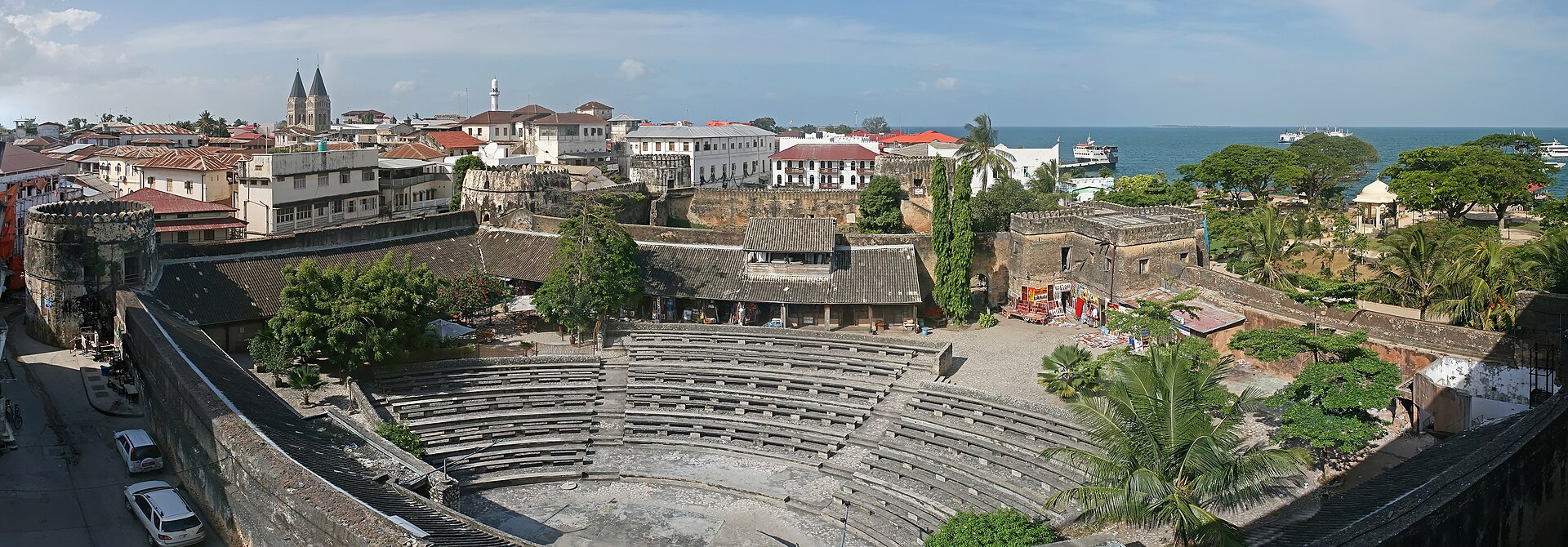
(source : Stonetown, Zanzibar, Internet)
튀르키예의 Adana province에 있는 Zangibar castle과 이름이 유사하니 이 둘은 뭔가 연계되어 있는 것 같다.

(source : Zanzibar castle, Internet, Alamy)
"People have lived in Zanzibar for 20,000 years.[citation needed] The earliest written accounts of Zanzibar began when the islands became a base for traders voyaging between the African Great Lakes, the Somali Peninsula, the Arabian Peninsula, Iran, and the Indian subcontinent. Unguja offered a protected and defensible harbour, so although the archipelago had few products of value, Omanis and Yemenis settled in what became Zanzibar City (Stone Town) as a convenient point from which to trade with towns on the Swahili Coast. They established garrisons on the islands and built the first mosques in the African Great Lakes Region.
Zanzibar에는 2만년전부터 사람이 살았다. Zanzibar에 대한 가장 오래된 기록은 이 섬들이 아프리카 대호수들, 소말리아반도, 아라비아반도, 이란, 그리고 인도 부속대륙과 사이의 무역항로의 근거지가 되었을 때였다. Unguja(상기 지도 참조)는, 비록 값어치 있는 물건 유적들이 별로 발견되지 않았지만, 보호되고 방어할 수 있는 항구를 제공했다. 오만인과 예멘인들은 Zanzibar city(stone town)에 정착했는데, 스왈리해안의 타운들과 무역하기 편리한 거점이었기 때문이다. 그들은 이 섬들에 군사기지를 설립하였고, 대호수 아프리카지역에 처음으로 모스크들을 세웠다. (상기 내용)
..............
Ancient pottery demonstrates existing trade routes with Zanzibar as far back as the ancient Sumer and Assyria.[2] An ancient pendant discovered near Eshnunna dated ca. 2500-2400 BC. has been traced to copal imported from the Zanzibar region.[3]
고대의 도자기는 Zanzibar와 고대 수메르와 앗시리아까지 무역항로가 존재한다는 것을 보여 준다. Eshnunna(이라크내) 가까이에서 발견된 기원전 2500-2400시기의 고대 pendant(목걸이에 걸게 되어 있는 보석)은, Zanzibar지역에서 수입된 copal (향있는 나무)을 보여 준다. (상기 내용)
Traders from Arabia (mostly Yemen), the Persian Gulf region of Iran (especially Shiraz), and west India probably visited Zanzibar as early as the 1st century AD, followed by Somalis during the Middle Ages with the emergence of Islam. They used the monsoon winds to sail across the Indian Ocean and landed at the sheltered harbor located on the site of present-day Zanzibar Town.
아라비아(대부분 예멘), 이란의 페르시아만지역 (특히 Shiraz) 그리고 서인도지역의 무역인들이 기원후 1세기부터 Zanzibar를 방문했을 것이다. 이슬람시기의 중세시기에는 소말리언도 참여했다. 그들은 인도양을 건너기 위해 몬순 바람을 이용하여 오늘날 Zanzibar town의 피난항구에 들렀다. (상기 내용)
(source : History of Zanzibar, wikipedia, 인용출처 : 필자의 네이버블로그(lainfos) , 카테고리, 아프리카/사헬)
필자는 암문성에 관한 글에서 아리비아지역의 스키타인 문화인 Nabateans의 페트라에 대해 살펴 보았다. 예멘인, 오만인 등 아리비아인들의 무역통로 거점이 되었다는 상기 기록은, 스키타인의 인도에 이르는 무역루트의 중간거점이 이곳 Zanzibar city가 되지 않았나 추정된다. 튀르키예의 Isauria지역의 스키타이 연관성이 여기서도 나타난다.
광개토태왕이 이 지역에 진출했을 가능성도 보인다. 지중해에서 인도양을 거쳐 인도지역에 진출하려면 이 지역의 거점을 거쳐야 할 것이기 때문이다. 필자는 광개토태왕 비문에 나타난 모수성이 탄자니아지역에 있는 것이 아닌가 추정했다.
"In a grave in Eshnunna, a pendant made of copal from Zanzibar was found.[111] A small number of seals and beads from the Indus Valley civilization were also found.[112]"
이라크지역의 Eshnunna의 무덤에서 Zanzibar의 copal(향이 나는 나무)로 만든 pendant (목걸이에 거는 보석)이 발견되었다. 인더스문명에서의 적은 수의 seals과 beads(목걸이)도 발견되었다. (상기 내용)
(source : Eshnunna, wikipedia, 인용출처 : 필자의 네이버블로그(lainfos), 카테고리, 수메르외)
상기 내용은 메소포타미아 문명이 동아프리카의 zanzibar지역과 인더스문명과의 교류를 보여 준다. 즉 메소포타미아지역에서 인도지방으로 가는 길에 몬순바람을 타고 zanzibar지역을 지나 간다는 것이다. 그리고 이 근처의 sea of zanj지역은 매우 위험한 바닷길이었다 한다. 그래서 Zanzibar지역이 중간 거점으로서 중요했는지도 모른다. 따라서 지중해에서 인도양을 거쳐 인도로 향하고자 하는 광개토태왕이라면 이 지역을 거쳤을 것으로 추정된다. 따라서 탄자니아의 모수성(牟水城)이라면 이러한 논리가 맞게 된다.(아래 자료 참조). 마한의 56개국 중에는 모수국(牟水國)이 있다.
"14) 모수성(牟水城) : 간연 3가
East Botswana의 Mosu Safari (모수의 모는 소머리모, 즉 물소가 있는 강)가 있는 지역의 성으로 보인다. Mosu Safari는 Chobe river의 지류인 Mosu river에 있을 것으로 추정된다. 아래 지도에서 보면 Chober river의 아래에 보츠와나가 있다. 위의 Zambezi강의 잡진성과 마찬가지로 Great Zimbabwe의 일부로 판단된다. (그러나 현재는 잡진성이 튀르키예 Adana province에 있는 Zangibar castle 또는 탄자니아 우측 섬에 있는 Zanzibar city의 stone town으로 판단된다)

Chobe Park Safari (Chobe river)

Chobe (=Cuando) river and Zmabezi River (source : Wikipedia)
(자료 : 필자의 글 '광개토태왕 비문을 통한 정벌지역 추정')
즉 잡진성이 동아프리카 Zanzibar city(Tanzania 동쪽 섬)에 있는 것일 수 있으나, 아단성과 잡진성을 동시에 언급하며 간연 10가로 한 수묘인제의 내용을 고려할 때, 튀르키예의 아단성 옆에 있는 Zangibar castle이 잡진성일 수도 있다고 판단된다.
그러나 Zanzi의 어원 Zanj가 아프리카인을 가리킨다는 위키피디아 정보를 고려하면 Zanzibar(Zangibar)의 이름은 동아프리카가 먼저일 것으로 보인다. 따라서 Zanzibar의 stonetown이 잡진성일 수도 있다고 본다. 이에 대한 연구는 모수성을 연구할 때 한번 더 살펴 보기로 하자. 멀리 떨어진 두 지역이 이름이 유사한 것은 아직 알 수 없으나, 같은 스키타인이 활동한 지역이기 때문이 아닐까 짐작해 본다.
스키타인은 스코틀랜드, 이베리아반도 서쪽, 지중해 그리스지역, 레반트지역, 아나톨리아지역, 메소포타미아지역, 북아프리카지역, 아리비아지역, 동아프리카, 인도서쪽의 Sakastan지역 (Sindh지역) 등으로 광범위한 지역에 활동한 것으로 보인다.
위키자료는 한국의 경주 금관이 스키타인의 그것이라 말한다. 필자는 중국 산동성 지역의 고대 벽화에서 프리기언 모자를 쓴 스키타인의 모습을 보았는데, 이들을 중국에서는 Ho라 불렀다. Ho는 胡를 의미하며, 흉노, 훈족, 스키타인과 관련이 있지않나 생각한다.
왕성한 해상활동을 보이는 스키타인은 바다에 접한 지역에서 우선적으로 활동한 것으로 보인다. 그리고 강을 따라 육지로 진출하는 모습이다. 이러한 모습은 광개토태왕의 진출지역과 유사한 모습을 보인다. 고구려 수군활동의 특출한 능력은 발해에서도 이용되었다.

Indo-Roman Trade Route (source : Wikipedia)

Nabatean Trade Network (source : Wikipedia)
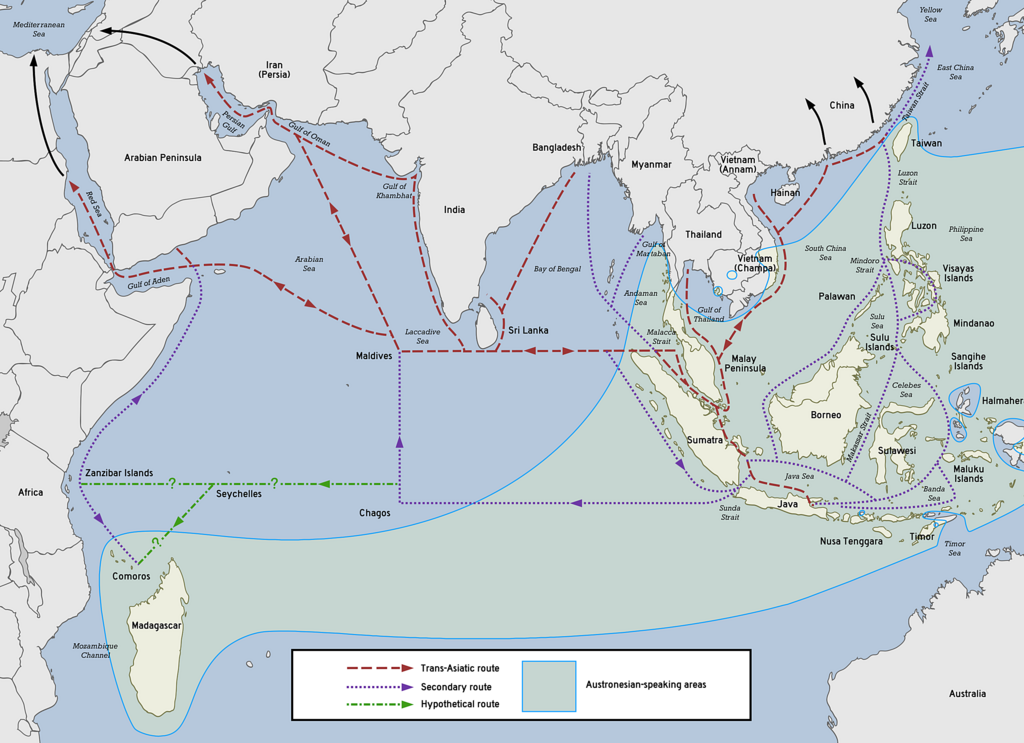
Austranesian Trade Route (source : Wikipedia)
III. 결 론
튀르키예의 Adana provine에 있는 아단성(Adana Castle)과 Isauria 지역에 있는 잡진성(Zangibar castle)은 고조선의 영역이면서 스키타인의 영역으로 보이며, 광개토태왕이 간연 10가의 수묘인제를 둔 이유를 이해하게 한다.
그리고 또한 훈족의 이 지역 진출과 이 지역의 로마 관리 파견의 공백시기, 그리고 Isauria지역에서의 3-5세기 세련된 조각품과 대형 묘 등의 발굴과 로마사의 이해가 가지 않는 내용은 이 지역이 고구려의 점령지가 아니었을까 하는 추정을 하게 한다. 따라서 역사적으로도 이 지역의 고구려의 진출 가능성을 강력하게 보인다.
또한 Isaurians에 대한 로마의 통제 불능 및 Galatian에게 양도했다는 것과 Isaurians의 강한 독립적 성향과 전투적인 능력은 이들이 스키타인이 아닌가 하는 판단을 하게 한다. 그러므로 이 지역에 있는 Zangibar castle이 Adana castle과 더불어 스키타인의 특성을 공통으로 가지고 있어, 고조선 선조에 대한 수묘인제의 광개토태왕의 의도에 맞는 간연 10가를 둔 아단성과 잡진성으로 판단된다.
결론적으로 말해서 튀르키예의 Adana castle은 광개토태왕이 공취한 아단성이라 판단되며, 그 이웃 Isauria지역에 있는 Zangibar castle도 광개토태왕이 백제로부터 공취한 잡진성으로 판단된다. 이들 두 성은 이웃하여 있어, 아단성과 잡진성을 간연 10가에 수묘인제도를 맡긴 광개토태왕 비문의 내용과도 일치를 보인다고 하겠다. 동아프리카의 Zanzibar에 대한 연구는 모수성에 대한 차후 추가연구에서 더 살펴 보기로 한다. 단지 여기서는 같은 스키타인의 특성으로 인해 유사한 이름이 있을 가능성만 확인하고자 한다.
이 다음 글은 장수왕 시기의 아단성에 대해서 연구해 보고자 한다.
'한국의 역사 > 고구려' 카테고리의 다른 글
| 곡튀르크는 돌궐이 아니라 고구려이다 (0) | 2026.06.08 |
|---|---|
| 광개토태왕이 공취한 백제의 암문성은 요르단의 Amman Citadel인가? (3) | 2025.10.16 |
| 고구려 대무신왕이 복속 받은 구다국은 어디인가? (0) | 2023.11.04 |
| 그리스의 조르바 댄스(Zorbas Dance)는 어디서 왔을까? (0) | 2023.09.15 |
| 고구려 - 수, 당 전쟁은 유럽에서 있었다 (0) | 2022.10.28 |