아래 지난 글에 이어진 글입니다. 신라 법흥왕 진흥왕 시기의 인도역사를 보며 분석하고자 합니다.
https://lostcorea.tistory.com/1939
대가야는 인도에 있었다 (I)
I. 머리말필자는 금관가야는 북아프리카 튀니지아의 카르타고에 있었다는 글을 쓴 바 있다. 김수로왕과 석탈해의 전쟁에서 신라와 가야 사이의 바다(김해?)의 존재, 그리고 허황옥의 여행이 아
lostcorea.tistory.com
잠시 신라 법흥왕과 진흥왕의 가야 정벌 국내자료를 재게해 보면 아래와 같다.
"《일본서기》에는 법흥왕 16년에 해당하는 계체천황 23년(529) 임나의 4개 마을을 점령하는[5] 한편 탁순국의 웅천(熊川)을 공격해 가락국의 부흥을 지원하던 오미노 케누(近江毛野臣)의 왜병을 패퇴시키고, 법흥왕(法興王) 18년(531)에는 구례모라(久禮牟羅)의 백제군을 격파하여 이듬해에 금관국을 신라에 합병시켰다. "
(자료 : 이사부, 위키백과)
아래 일본서기의 기록에는 이사부를 '이질부례지간기' 또는 '이질부례지나말' 로 소개되어 있다. 이는 외국어 이름을 한자로 표현한 것이다. 즉 이사부는 외국인이었다는 것이다. 또한 이사부는 임나관가 10국을 공격해서 562년 멸망시킨 것으로 기록한다.
"《일본서기》에는 이질부례지간기(伊叱夫禮智干岐) 또는 이질부례지나말(伊叱夫禮知奈末)로 소개되어 있다..........
이사부가 가야를 정벌한 562년을 《일본서기》는 신라가 임나관가 10국을 공격해서 멸망시킨 시기로 기록한다.[10] 멸망한 임나 10국은 가라국, 안라국, 사이기국, 다라국, 졸마국, 고차국, 자타국, 산반하국, 걸손국, 임례국인데 구체적 위치는 알려져 있지 않다.
《일본서기》 흠명 23년(562), "23년(562) 봄 정월 신라가 임나관가(任那官家)를 쳐서 멸망시켰다(어떤 책에는 21년에 임나가 멸망했다고 한다). 통틀어 말하면 임나요, 개별적으로는 加羅國, 安羅國, 斯二岐國, 多羅國, 卒麻國, 古嵯國, 子他國, 散半下國, 乞飡國, 稔禮國으로 모두 열 나라이다(卄三年春正月新羅打滅任那官家[一本云卄一年任那滅焉]. 總言任那, 別言加羅國安羅國斯二岐國多羅國卒麻國古嵯國子他國散半下國乞飡國稔禮國合十國)."
(자료 : 이사부, 위키백과)
출처: https://lostcorea.tistory.com/1939 [Lost World History 잃어버린 지구촌 역사:티스토리]
상기 기록에서 생각할 수 있는 것은 가야는 소국으로 존재하며 집단으로 행동한다는 점이다. 법흥왕 시기나 진흥왕 시기 모두 같은 현상을 보인다. 그리고 임나가 항상 거론되는 것을 보면 가야가 왜라는 것을 함축하고 있다. 일본서기의 왜곡인지는 몰라도, 보드가야에서 Mangla-Gauri, Rama-Shila 가 숭배되었다는 것은 가야가 왜와 다르다는 것을 의미하지 않나 생각한다. 아니면 왜가 도이라 하는 것을 보면 구이는 아니라도, 구한에 포함되는지도 모른다. 신라의 역사에서 왜의 침입으로 고초를 많이 겪었는데, 지중해에서의 왜의 침입으로 판단된다. 그러나 법흥왕 진흥왕의 기록에서는 왜라 기록하지 않고 가야라고 기록한 것을 보면, 가야는 왜와 연합활동을 할지라도 가야는 왜와 다른 실체라 할 수 있다. 김수로왕의 금관가야 전설 (뇌질 청예)이나, 대가야의 조상, 뇌질주일에 관한 이야기를 보면 그렇다. 진흥왕 시기에는 우륵이란 가야 음악인을 우대하고 가야금을 연주하게 하는 것을 보면 그렇다.
이사부에 이어 사다함의 이야기가 아래와 같이 전한다. 화랑의 풍월주인 사다함이 진흥왕의 대가야 정복에 큰 활약을 했다는 것이다. 아버지는 구리지라 한다. 구리지 사다함 모두 외국인의 성명이 아닌가 한다. 15-16세의 어린 나이로 참전하여 공을 세워 가야인 노예 300명과 전답을 받았는데, 가야인 노비는 모두 풀어 주고, 전답도 불모지인 알천을 받았다 한다. 이후 친구가 죽어 따라 죽었다는 이상한 끝맺음을 하고 있다. 필자는 알천을 Transoxiana의 아무다리야 강으로 판단한다.
"사다함(斯多含, 547년? ~ 564년?, 풍월주 재임: 562년 ~ 564년)은 신라의 화랑으로 진흥대왕의 대가야 정복 때 큰 활약을 하였다. 당시 실제 성씨는 기록되지 않았으나 삼국사기 이후 성씨는 김씨로 기록되었다. 벼슬이 급찬이었던 구리지의 아들이다.
사다함은 구리지의 아들로 내물 마립간의 7세손이다. 유력한 진골 귀족이었으며, 풍채가 청순하고 뜻이 방정하여 무리로부터 화랑에 추대되었다. 낭도는 1,000여 명에 이르렀다고 한다. 562년에 진흥왕의 명으로 이사부가 대가야 공격 나섰는데, 사다함은 15~6세의 나이로 왕에게 출진을 간청하여 귀당(貴幢)의 비장(裨將)으로 종군하였다. 사다함은 자청하여 선봉이 되었으며, 성문인 전단량(旃檀梁)을 기습하여 적을 당황시켰고 그 결과 크게 승리하였다. 이 공으로 가야인 300명과 전답을 받았으나 노비는 모두 풀어주고 전답 역시 알천(閼川)의 불모지를 받았다.[1]"
(자료 : 사다함, 위키백과, 인용출처 : 필자의 네이버 블로그(lainfos), 카테고리, 신라)
이러한 이사부, 사다함, 진흥왕의 내용을 알고서, 인도 지역의 역사를 알아 보고자 한다. 필자는 당시 신라를 페르시아의 사사니언 왕조로 판단한다. (아래 글 참조). 따라서 진흥왕은 Khosrow I 에 해당한다.
https://lostcorea.tistory.com/604
사산왕조 페르시아는 신라였다.
다음 블로그 '세계삼한역사연구'의 한부울님은 사산왕조 페르시아의 두 여왕의 경우를 거론하며, 사산왕조 페르시아가 혹시 신라가 아닌가 하고 하였다. 하여 나도 자료를 보니 사산왕조 페르
lostcorea.tistory.com
3. Khosrow I (Persia)의 인도 북부 진출
페르시아 사산왕조가 신라였다면, 진흥왕의 대가야 정복은, 사산왕조의 Khosrow I (r 531-579)의 동부 인도로의 원정에 해당한다.
아래 자료에서는 호스로 1세는 확장정책을 펴, Sind, Bust, Al-Rukkhaj, Zabulistan, Tukharistan, Dardistan, Kabulistan을 지배하고, 제일 튀르크 카칸국의 도움으로 에프탈을 패배시켰다 한다. 호스로1세의 기록에서 동방에의 원정 내용은 잘 설명되지 않는다. 아래 내용도 에프탈의 설명 자료에서 나타난다. Sindh는 파키스탄 인더스강 하류지역이고, Zabulistan (호라산과 인도 사이), Kabulistan (카불) 등은 아프카니스탄 지역이다. Tukharistan(토하리스탄)은 Tarim Basin 남쪽에 접한 지역이며, Dardistan은 파키스탄 북쪽의 카시미르지역이다. (아래 지도 참조)
"After Kavad I, the Hephthalites seem to have shifted their attention away from the Sasanian Empire, and Kavad's successor Khosrow I (531–579) was able to resume an expansionist policy to the east.[123] According to al-Tabari, Khosrow I managed, through his expansionsit policy, to take control of "Sind, Bust, Al-Rukkhaj, Zabulistan, Tukharistan, Dardistan, and Kabulistan" as he ultimately defeated the Hephthalites with the help of the First Turkic Khaganate.[123]
(source : Hephthalites, wikipedia, 인용출처: 필자의 네이버 블로그(lainfos), 카테고리, Hephthalites)
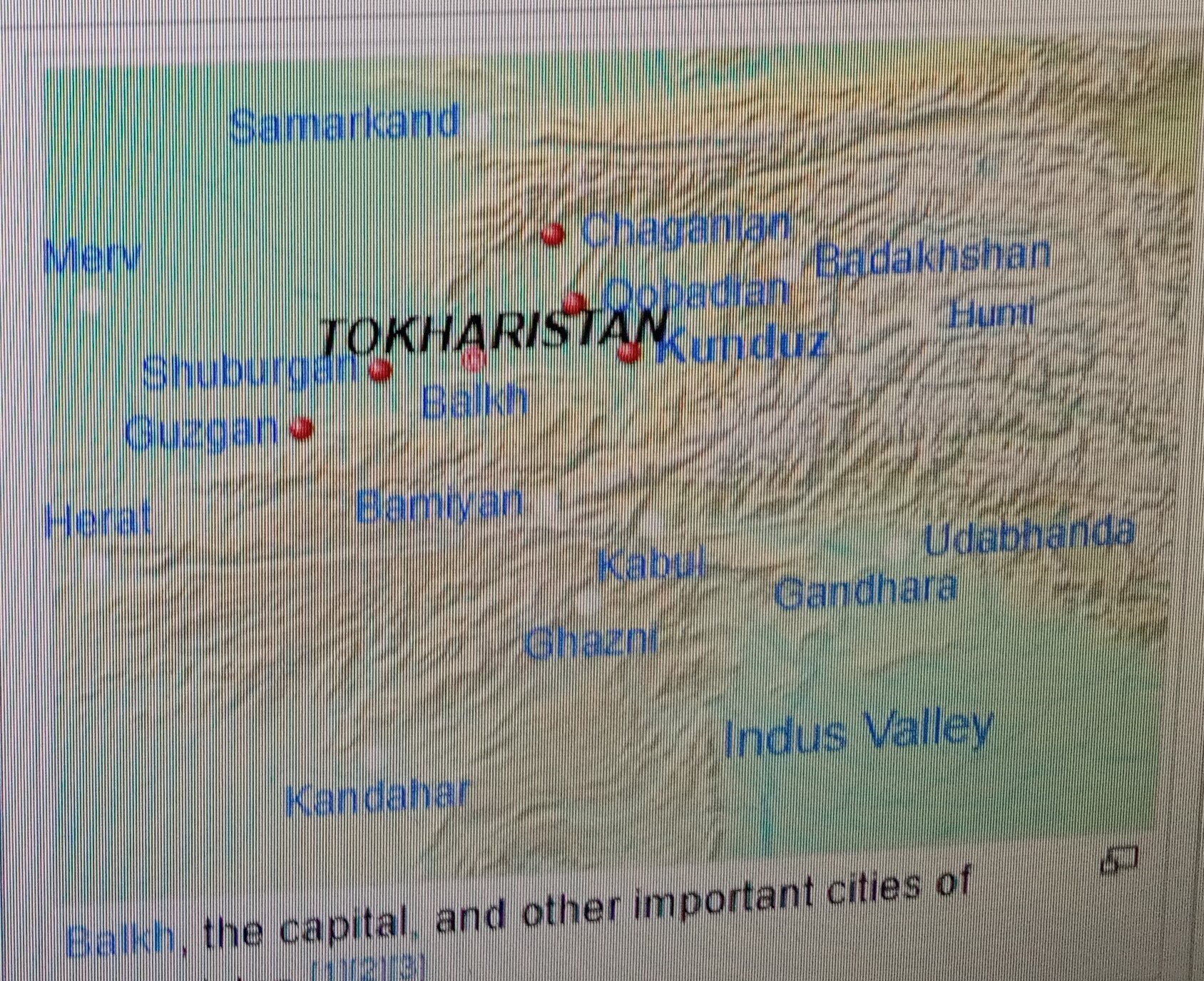
토하리스탄 주위 지역 (자료 : 위키피디아)
즉 상기 내용 어디에도 인도에 진출했다는 기록은 없다. 그런데 아래 벽화 사진이 눈길을 끈다.
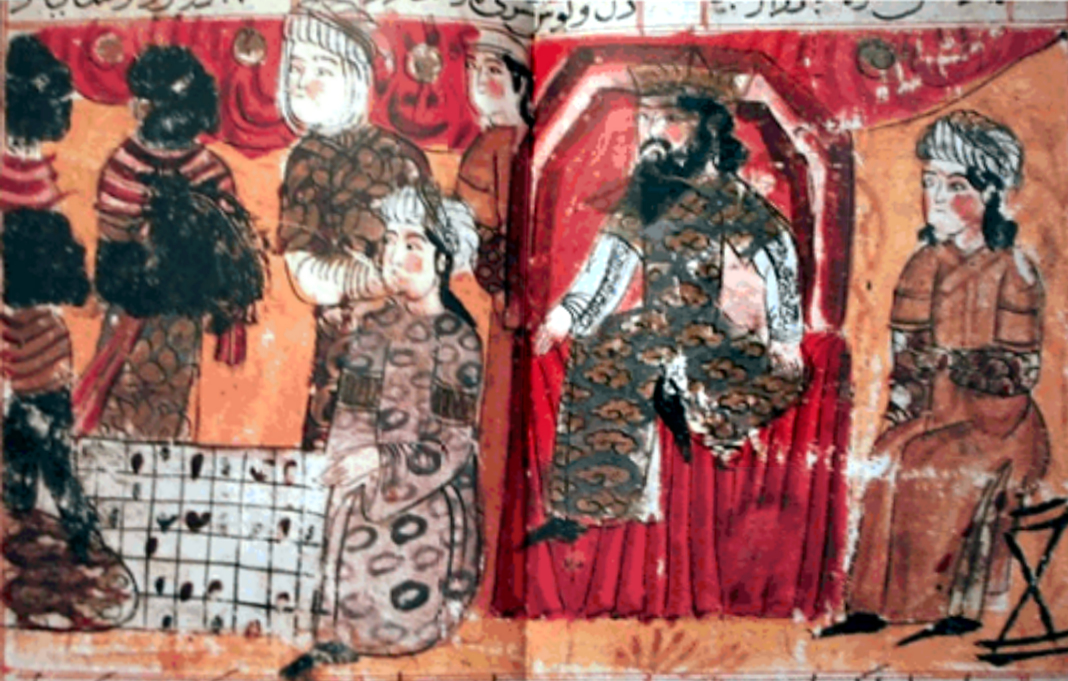
Sasanian Empire King Khosrow I sits before the chessboard, while his vizir and the Indian envoy of Kannauj are playing chess. Shahnama, 10th century CE. (source : wikipedia )
Khosrow I왕의 신하와 Kannauj 사신이 장기 두는 것을 호스로왕이 보고 있는 모습이라 한다. 그래서 Kannauj가 누군가 살펴 보니 인도북부에 있는 무쿠리 (Maukharis) 왕국이다. (아래 지도 참조). 이러한 벽화는 신라 진흥왕(사산왕조의 호스로 1세)이 이들 지역에 진출하지 않았나 하는 생각을 가지게 한다. 따라서 Maukharis of Kannauj (510-606)의 역사를 살펴 보았다.
1) Maukharis of Kannauj (510-606)
Maukharis왕국은 510-606년 기간 약100년간 존속한 비교적 단명의 왕국이다. 이는 외지의 지배세력이라는 의미를 가질 수 있다. 전에는 굽타왕국의 속국이었다 한다. 6세기 중반에 독립을 하였다는데, 이 시기가 진흥왕의 대가야 정복시기(562)와 유사하다. 그러나 606년경 후기 굽타왕국에 의해 정복당했다 한다. (아래 내용 참조) 606년은 진평왕 시기이다.
"The Maukhari dynasty (510-606) (Gupta script:

, Mau-kha-ri) was a post-Gupta dynasty who controlled the vast plains of Ganga-Yamuna for almost a century from Kannauj. They earlier served as vassals of the Guptas and later of Harsha's Vardhana dynasty. The Maukharis established their independence during the mid-6th century. The dynasty ruled over much of Uttar Pradesh and Magadha. Around 606 CE, a large area of their empire was reconquered by the Later Guptas.[3] According to Xuanzang, the territory may have been lost to King Shashanka of the Gauda Kingdom, who declared independence circa 600CE.[4][5]
(source : Maukharis of Kannauj, wikipedia, 인용출처 : 본필자의 네이버블로그(lainfos), 카테고리 , 중세인도)
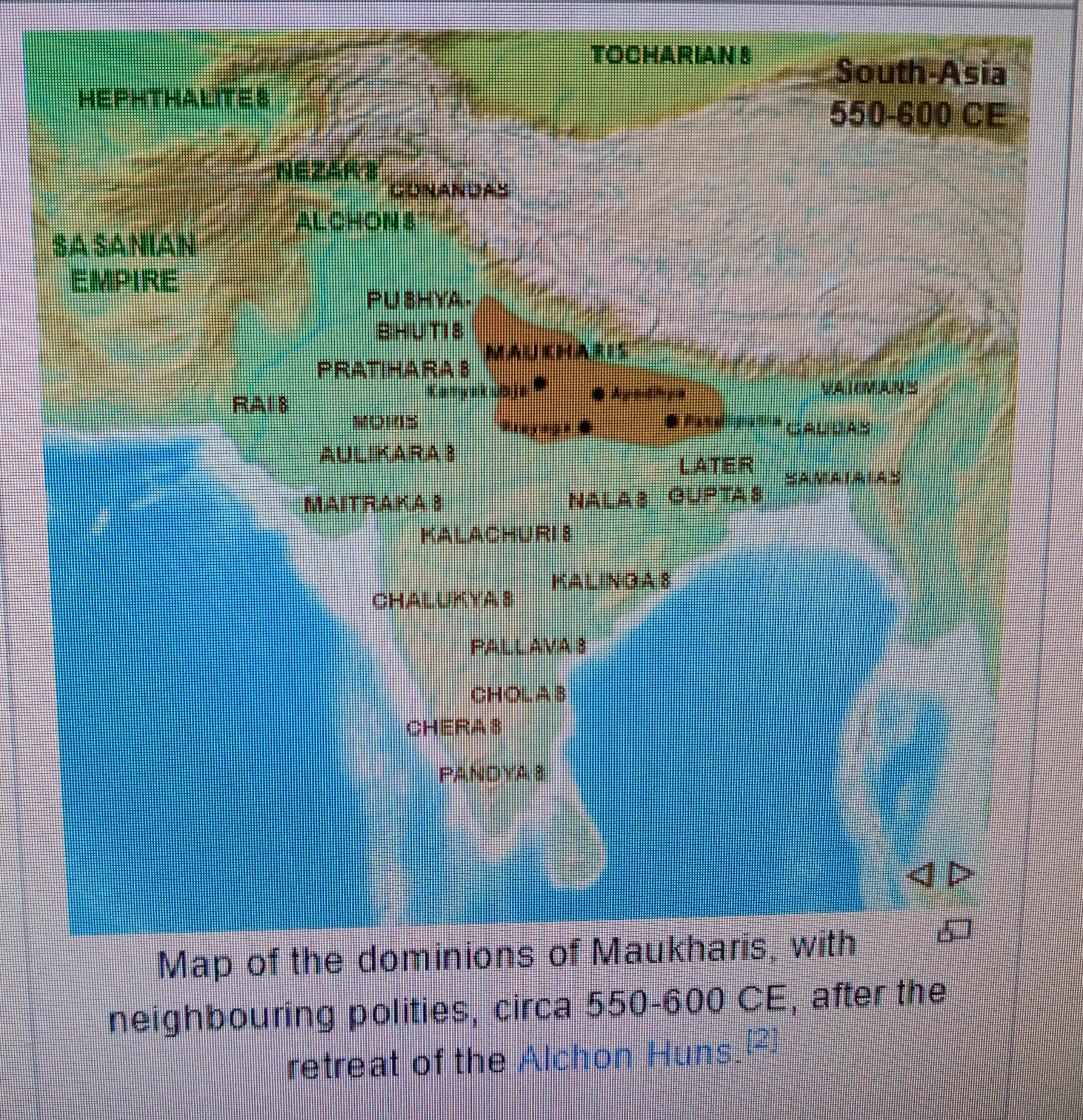
Map of the dominions of Maukharis, 550-600 ce (source : Wikipedia)
2) Maukharis of Gaya (4c - early 6c)
Maukharis of Gaya가 4세기에서 6세가 초반까지 있었다 한다. 가야란 명칭이 붙은 것이 주목을 끈다. 이는 마가다 지역의 Maukhari 왕조의 일부라 하는데, Maukharis 왕조가 가야지역에 있음을 말한다.
"The Maukharis of Gaya were a branch of the Maukhari dynasty that ruled the Magadha region.[2] They were likely the original branch of the Maukharis and a later branch split off from them to establish the more prominent Maukharis of Kannauj.[3] They have been dated from the fifth to the early sixth centuries.[4]
History
The earliest reference to Maukharis in the region is an inscription from the Mauryan period written in Brahimi on a clay seal dating back to the third-century BCE and contains the term Mokhalinām.[5] The term, Maukhari, is likely a patronymic meaning “descendants of Mukhara” with Mukhara being the common ancestor of all branches of the Maukharis.[6] Based on this, Gaya was likely the original seat of the Maukharis prior to the westward migration of a separate branch which travelled to Kannauj under Harivarman.[7] The Gaya branch likely provided assistance to the Kannauj branch in establishing power.[4] Another later set of three inscriptions from Anantavarman located in the Barabar Caves attest to the continued presence of Maukharis in Magadha.[4] They likely ruled as feudatories, probably that of the Later Guptas.
(source : Maukharis of Gaya, wikipedia, 인용출처 : 필자의 네이버블로그(lainfos), 카테고리, 중세인도)
Maukhari란 단어는 Mukhara의 자손들이라 하는데, 무쿠리란 단어가 떠오른다. 무쿠리는 몽고인을 의미한다고 한다. 일본 문헌에 몽고 원나라의 일본원정시 무쿠리고꾸리가 몽골과 고려를 지칭했다고 하며, 무쿠리는 무서운 것을 의미한다고 한다. 즉 인도 밖의 외지인의 세력 집단이란 판단이다. 상기 글에서는 이들이 인도 북동부의 가야(Gaya)지역에서 서쪽으로 이동한 집단이라 말하고 있다.
즉 이들은 보드가야지역과 밀접한 관련이 있고 계속 마가다 지역에 머물렀다 한다. 다시 말하면, 이들의 세력이 인도 북동부에서 북중부 마가다지역까지 있었음을 알 수 있다.
3) Sharvavarman (r 560-575) : 사다함?
Maukhari 지배자 중에 Sharvavarman가 있는데, 560-575기간동안 지배했다 한다. 이는 무쿠리 왕중에 제일 위대한 인물로서, 575년 마가다를 침범하여, 후기 굽타왕 Damodaragupta, Mahasenagupta를 격파하고 Uttar Pradesh 전지역을 다스린 왕이라 한다. (아래 내용 참조)
또한 후기 굽타왕 Mahasenagupta (r 562-601)의 중요한 라이벌이라 한다. 또한 인도에서의 에프탈 등 훈족의 시대 마감에 따라, 인도와 사산왕조 페르시아가 바로 접하게 되었다 한다. Chess게임을 호스로왕에게 보낸 인도왕은 바로 Sharvavarman이라 한다. 이 시기가 sharvavarman의 재위가 시작하는 560/565와 호스로왕의 임기 끝인 579년 사이에 있기 때문이다. (아래 내용 참조)
"Sharvavarman (Brahmi script: 𑀰𑀭𑁆𑀯𑁆𑀯𑀯𑀭𑁆𑀫𑁆𑀫𑀸 , Gupta script:

Śa-rvva-va-rmmā, complete form: Śarvavarman Indra Bhattarika) was the Maukhari ruler of the Kingdom of Kanyakubja from 560 to 575 CE.[1]
Sharvavarman may have been the greatest of the Maukhari emperors, invading Magadha circa 575 CE and defeating the Later Guptas kings Damodaragupta and Mahasenagupta, which made him ruler of the entire Uttar Pradesh.[2][3]
...........
Sharvarman was an important rival of the Late Guptas king Mahasenagupta (r. c. 562-601 CE) during the period 575-585 CE.[8]
With the end of Hunnic power in India, new contacts were established between India and the Sasanian Empire.
.....
It seems that the Indian ruler who sent the game of chess to Khosrow may have been Śarvavarman, between the beginning of Śarvavarman's reign in 560/565 and the end of Khosrow's reign in 579,[7][9][10]"
(source : Sharvavarman, wikipedia, 인용출처 : 필자의 네이버 블로그(lainfos), 카테고리, 중세인도)
상기 내용은 Sharvavarman이 진흥왕 시기 대가야 정복에 큰 공을 세운 사다함이 아닌가 한다. 즉 Later Gupta가 가야세력이고, 이를 점령한 Maukharis 세력이 신라인으로 판단된다. 562년 대가야를 정복했는데, 이 시기의 Later Gupta 왕 Damodaragupta (560-562)에 관한 내용이 없다. 비문자료에 모두 있을 것인데, 의도적인 감추기로 보인다. 이는 562년 Damodaragupta가 전쟁에 패한 것을 암시한다. 이후의 Mahasenagupta(562-601)가 Sharvavarman와 중요한 경쟁관계였다는 내용은 사다함이 이 점령지역을 통치할 때 적대적 관계임을 말한다. 이후 다시 Later Gupta세력이 Maukharis왕국을 606년에 끝맺게 했다는 것은 다시 가야세력에 신라의 점령세력이 물러난 것을 의미한다고 본다.

Find spots of seals belonging to Sharvavarman (source : Wikipedia)
상기 지도는 Sharvavarman의 인장이 발견된 지역인데, 중부인도의 Asirgarh에서부터 북동부의 Nalanda까지 상당히 넓게 퍼져있다. 마가다 위주의 북부지역이 아닌 중부, 북동부까지 아우른 지역을 Maukhari왕조가 지배한 것이 아닌가 한다.
상기 Sharvavarman이 사다함이라면, 그 이전의 지배자도 궁금하여 살펴보니 이사부와 관련된 것같은 인물이 나온다.
4) Isanavarman (r 550-560), son of Ishvara-varman (이사부?)
Sharvavarman 이전에 Isanavarman (r 550-560)은 최초의 독립적인 Maukhari 왕이라 한다. 매우 강력한 왕이라 하는데, 강력한 Maukhari 지배자 Ishvara-varman의 아들이라 한다. (아래 내용 참조)
일본서기에서는 이사부를 이질부례지간기(伊叱夫禮智干岐) 또는 이질부례지나말(伊叱夫禮知奈末) 라고 말한다. 이질부례가 Ishvara를 음가차환한 것이 아닌가 한다. 즉 이사부의 아들 Isanavarman이 Maukhari의 초대 독립적 왕이 되었고 그의 아들 Sharvavarman이 사다함으로 판단된다. 즉 사다함은 이사부의 손자가 되는 셈이다.
"Iśanavarman (Gupta script:

, Ī-śā-na-va-rmmā) was the first independent Maukhari king of the Kingdom of Kanyakubja. He was a very powerful king, and adopted the title of Maharajadhiraja.
Early life
Ishanavarman was the son of the powerful Maukhari ruler Ishvara-varman (Iśvaravarman) and his queen Devi Upagupta. He was well known for his skill as an archer, particularly against enemy cavalry and elephants. Ishanavarman ascended the throne in 550 CE or 554 CE, probably after his father's death.[1][2]
Reign
The early Maukhari rulers had been on very friendly terms with the Later Guptas, and even conducted marriage alliances between themselves. An example is Ishanavarman's own mother Devi Upagupta, who was married to Ishvara-varman. However, things changed with time under him. Under Ishanavarman, the Maukharis began to assert their independence from the Later Guptas. Ishanavarman became hostile to the former overlords of the Maukharis, in order to conquer Magadha.[1]
Ishanavarman revived the Maukhari power, as some prestige was lost during the last years of his father's reign. Ishanavarman's inscriptions describe him as a valiant warrior whose hands were hardened and callused by the repeated use of the bow on the battlefield. His armies are stated to be vast and continuously on the march. The Haraha inscription of Śarva-varman mentions that Ishanavarman inflicted defeat upon the Andhras, Sulikas, and checked the Gaudas. The Andhra country was then ruled by the Vishnukundinas. The Vishnukundina king defeated must have been Indravarman or Vikramendravarman I.[3]
(source : Ishanavarman, wikipedia, 인용출처 : 필자의 네이버 블로그(lainfos), 카테고리, 중세인도)
상기 내용에서 후기 굽타와 Maukhari지배자 사이는 초기에는 결혼으로 맺어진 우호관계라 했다. 특히 이사부로 판단되는 Ishvara-varman이 굽타여인과 결혼했다는 것이다. 그런데 법흥왕 시기에 522년 가야국왕이 혼인을 청했다고 했다. 이 시기에 이사부가 가야왕족 여인과 결혼한 것이 아닌가 한다.
"이사부(異斯夫, 생몰년 미상) 또는 태종(苔宗)은 신라 지증왕 ~ 진흥왕 시대의 장군 · 정치가로, 내물 이사금의 4세손이다.
《일본서기》에는 이질부례지간기(伊叱夫禮智干岐) 또는 이질부례지나말(伊叱夫禮知奈末)로 소개되어 있다. 《삼국유사》에는 박(朴)씨, 이름은 이종(伊宗)이라 나타난다. "
(자료 : 이사부, 위키백과)
5) Later Gupta (490-750)
후기 굽타왕국이 대가야지역임이 밝혀져, 이들에 대해 좀더 살펴 보자.
|
Damodaragupta (자료 무)
|
560-562
|
|
Mahasenagupta
|
562-601
|
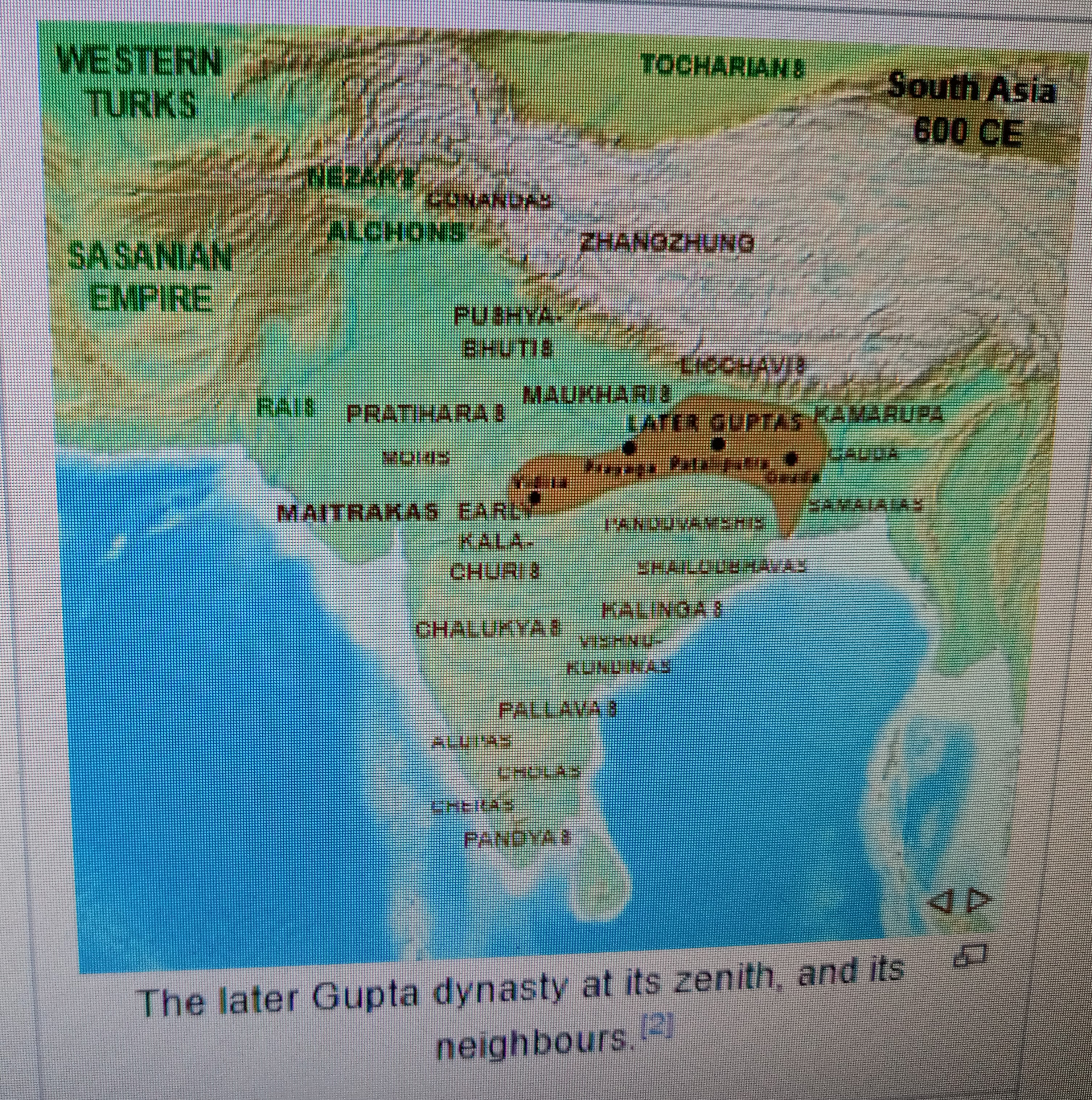
Map of Later Gupta in 600 (source: wikipedia)
특히 진흥왕이 대가야를 재토벌하는 시기 562년을 전후하여 살펴 보자. 562년 Damodaragupta가 신라와의 전쟁에서 패한 후 2년의 재위기간을 끝내고 (추정) Mahasenagupta로 이어진다.
(1) Mahasenagupta (r 562-575)
Mahasenagupta는 575년 전쟁에서 패하여 Malwa지역으로 이동하여 지냈다 한다. 그리고 전쟁후 Maukhari of Kannauj, 마가다의 속국이 되었다 한다. (아래 내용 참조) 즉 Maukhari왕국이 606년까지 존속하는 동안 후기 굽타왕국은 속국으로 지냈다는 것이다. 위에서 살펴 본 내용과 일치하는 흐름이다. 단지 562년을 575년으로 바꾸었다.
"Mahasenagupta was King of Magadha from 562 until his defeat in 575 and thereafter the King of Malwa until his death in 601. He belonged to the Later Gupta dynasty of Magadha.[2]
Just before his death, Mahasenagupta sent his sons Kumaragupta and Madhavagupta to Thanesar, where they became companions of Rajyavardhana and Harshavardhana.
Madhavagupta was made the Kannauj vassal of Magadha after the war. In Malwa, he was succeeded by his son Devagupta, who was defeated by Rajyavardhana of Kannauj in 605.[3]"
(source : Mahasenagupta, wikipedia, 인용출처 : 필자의 네이버 블로그 (lainfos), 카테고리, 굽타왕국)
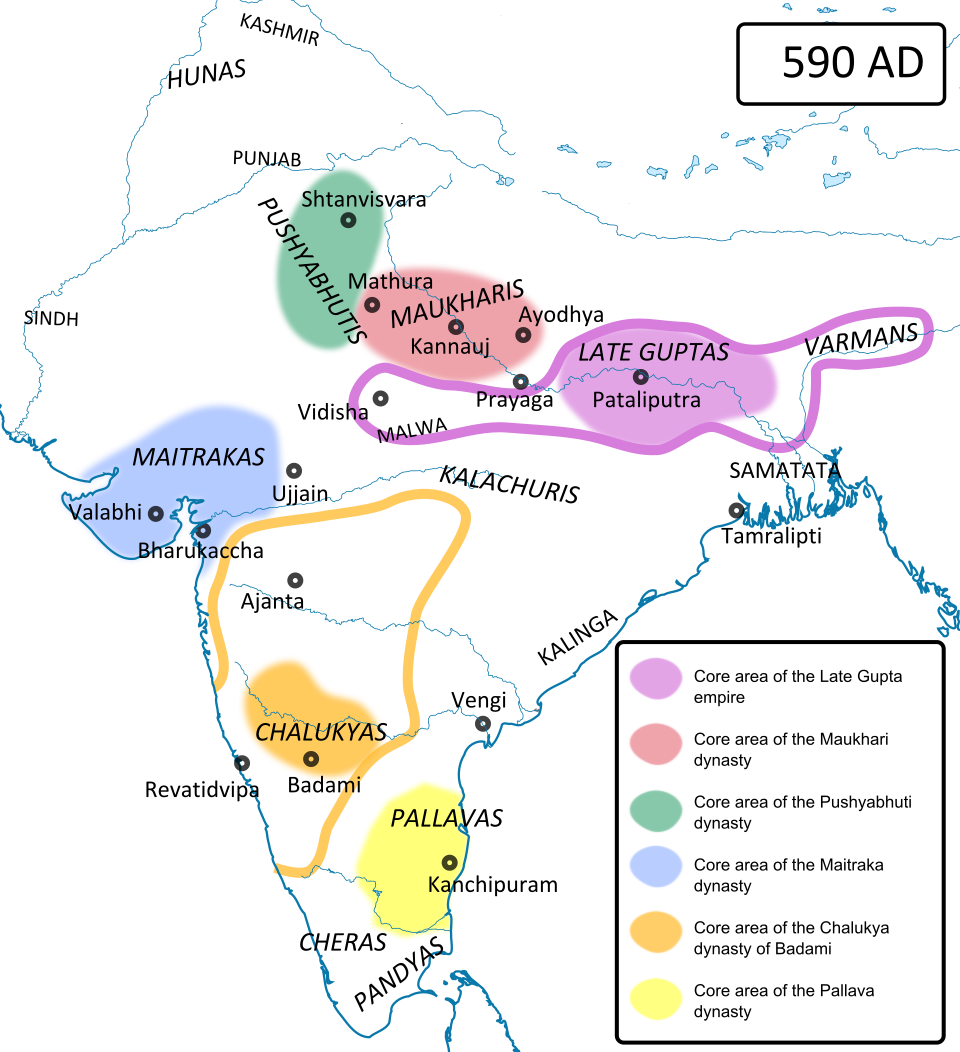
그런데 이 지역 역사를 보면서 Mihirakula라는 알천훈 왕의 기록이 눈길을 끈다. 재위 기간이 515-542년으로 신라 법흥왕 (514-540)의 시기와 유사하다. 신라가 알천훈지역까지 진출하고 나아가 인도지역에 진출한 것이 아닌가 한다. 그래서 522년 인도의 가야국왕이 혼인을 청했을 것으로 보인다.
6) Mihirakula (Alchon Hun King, 515-542) : 신라 법흥왕(?)
"Mihirakula (Gupta script: , Mi-hi-ra-ku-la, Chinese: 摩酰逻矩罗 Mo-hi-lo-kiu-lo), sometimes referred to as Mihiragula or Mahiragula, was the second and last Alchon Hun king of northwestern region of the Indian subcontinent between 515 and 542 CE.[6] He was a son of and successor to Toramana of Huna heritage. His father ruled the Indian part of the Hephthalite Empire. Mihirakula ruled from his capital of Sagala (modern-day Sialkot, Pakistan).[7][8]
..............
그에 대한 불교계 문서의 평은 잔인하다고 부정적인 평을 하고 있다. 법흥왕이 520년 율령을 반포하고 공복과 위계를 정하였으니, 엄격한 통치를 하고, 528년 불교를 인정하였으니, 그전에는 불교를 탄압을 하였을 가능성이 있다.
Mihirakula is known to have patronized Shaivism tradition of Hinduism.[11] The Rajatarangini calls him cruel, "a man of violent acts and resembling kala (death)", who ruled "the land then overrun by hordes of mlecchas (foreigners)."[12]
..........
The Buddhist texts record Mihirakula as extremely cruel and bad mannered,[11][6][14] the one who destroyed Buddhist sites, ruined monasteries, killed monks.[15] The Hindu kings Yashodharman and Gupta Empire rulers, between 525 and 532 CE, likely by 530 CE, reversed Mihirakula's campaign and ended the Mihirakula era.[16][17]
Etymology
The name "Mihirakula" is likely of Iranian origin and may have the meaning "Mithra's Begotten", as translated by Janos Harmatta. In Sanskrit, Mihira is Sun and Kula is Clan.[18] So, Mihirakula would mean (of/from) the Sun's clan.[19] According to Harold Walter Bailey: "A name like Toramana and his son's name Mihirakula interpreted by North Iranian (and not by Western Iranian) are clearly Iranian".[20]
그의 이름은 이란계 이름이라 상기 자료는 말한다. 즉 사산왕조 페르시아인 신라의 사람이라는 것을 말하는 것이 된다. 법흥왕이라는 추정을 뒷받침한다.
................
The 6th-century Alexandrian traveler Cosmas Indicopleustes states that the Hephthalites in India reached the zenith of its power under "Gollas", which is thought to be the same as Mihirakula from the last part of his name.[28][29]
Higher up in India, that is, farther to the north, are the White Huns. The one called Gollas when going to war takes with him, it is said, no fewer than two thousand elephants, and a great force of cavalry. He is the lord of India, and oppressing the people forces them to pay tribute.
— Cosmas Indicopleustes, Book XI
상기 자료는 공물을 받았다 한다. 즉 인도지역이 속국으로 있었다는 것이다.
(1) Gwalior inscription
Main article: Gwalior inscription of Mihirakula
The Gwalior inscription issued in the 15th regnal year created by Matricheta in a Surya temple, mentions Mihirakula. It confirms that Mihirakula rule extended to Gwalior.[citation needed]
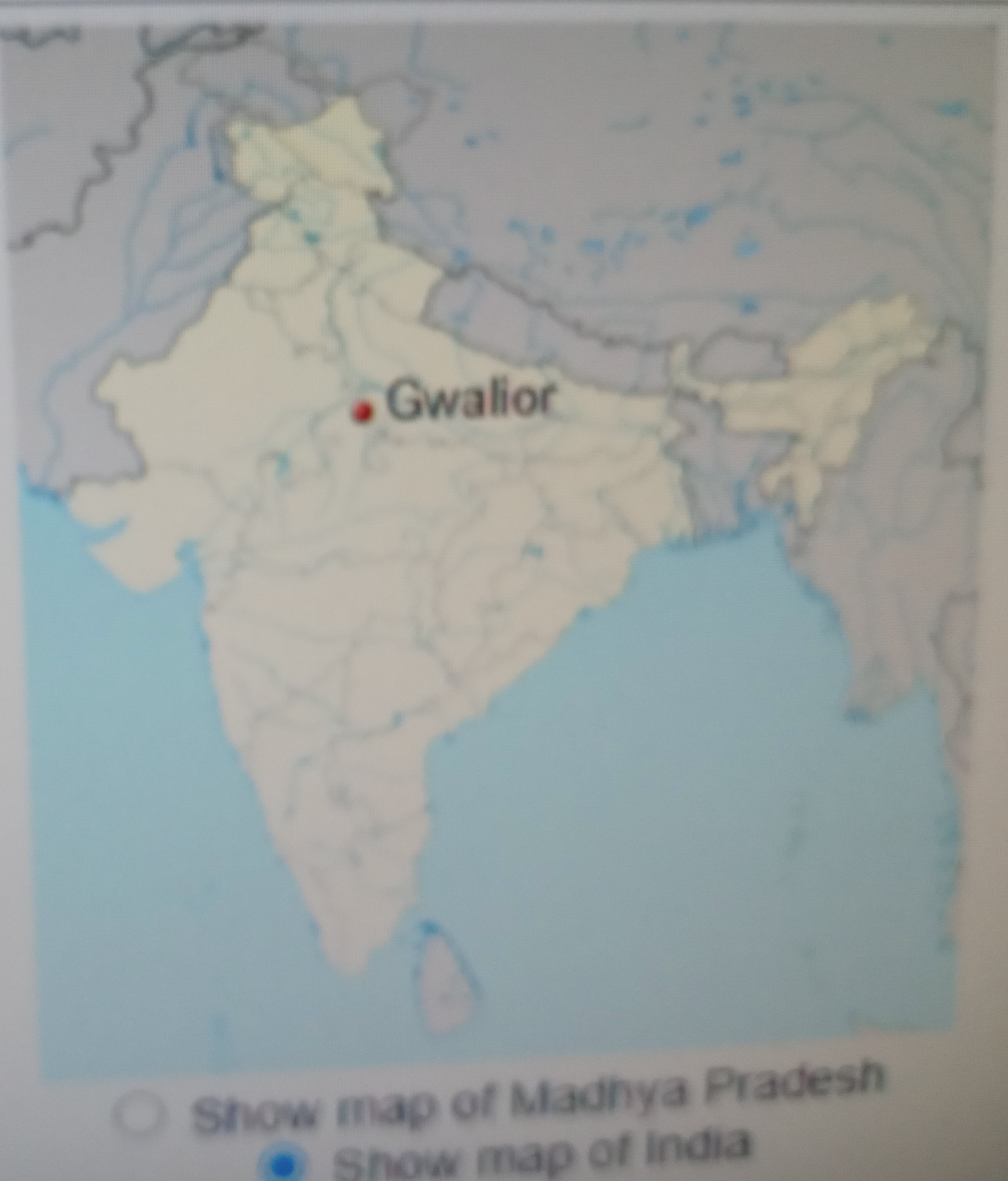
그의 지배가 상기 Gwalior지역까지 달했다고 한다. 상기 지도를 보면 인도 북중부지역이다.
(2) Mandasor Pillar Inscriptions of Yasodharman
Main article: Mandasor Pillar Inscriptions of Yasodharman
In 528 Mihirakula suffered a defeat in the Battle of Sondani by the Aulikara dynasty King Yashodharman, an event that is partly the subject of the Mandasor pillar inscription of Yasodharman. The defeat ended the Alchon Hun era in India.[30][16]
(source : Mihirakula, wikipedia, 인용출처: 필자의 네이버블로그(lainfos), 카테고리, Alchon Hun)
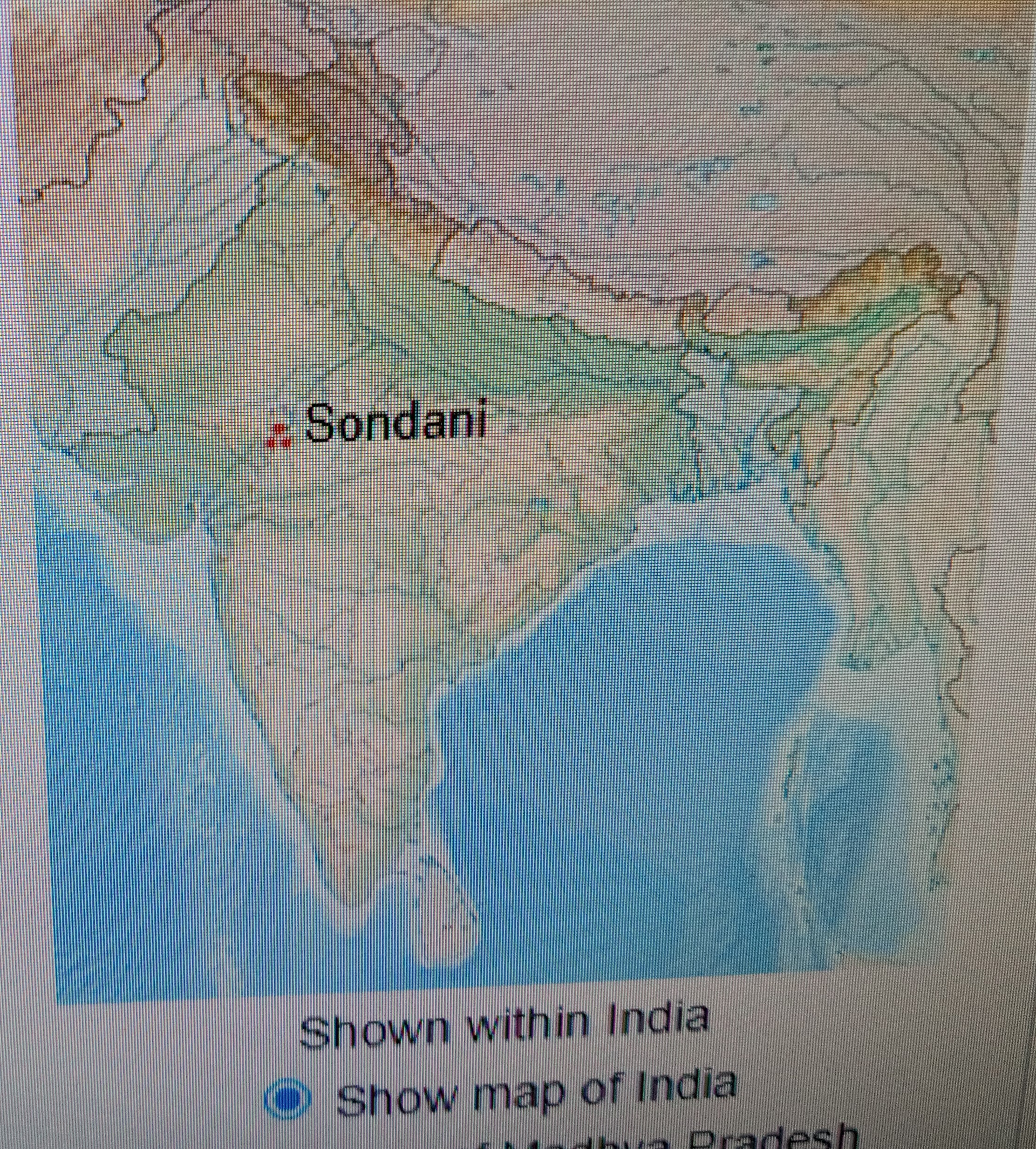
528년에는 Sondani전투에서 패하여 물러났다 하였다. 공교롭게도 법흥왕이 불교를 공인한 해이기도 하다.
그런데 법흥왕 시기에 해당하는 사사니언 페르시아 왕은 Kavad I세(r 488-531)인데, 이전부터 로마와 인도가 무역을 많이 했는데, Kavad I세는 인도의 무역을 전면 통제하며, 무역을 관리했다 한다. (아래 내용 참조) 이는 법흥왕 시기 우리가 상상하는 이상의 인도대륙 통제를 하고 있었다는 의미가 된다.
"The India trade
The Sasanians exerted considerable influence on trade in the region under Kavad.[69] By using the strategic location of the Persian Gulf, the Sasanians interfered to prevent Byzantine traders from taking take part in the India trade. They accomplished this either by bargaining with trade associates in the Indian subcontinent—ranging from the Gupta Empire in the north to the Anuradhapura monarchs of Sri Lanka in the south—or by attacking the Byzantine boats.[69] Iranian traders were also able to seize Indian vessels well before they could make contact with Byzantine traders.[69] These advantages resulted in the Iranian traders establishing something resembling a monopoly over the India trade.[70]
(source : Kavad I, wikipedia, 인용출처 : 필자의 네이버 블로그(lainfos), 카테고리, 사산왕조 (488-651))
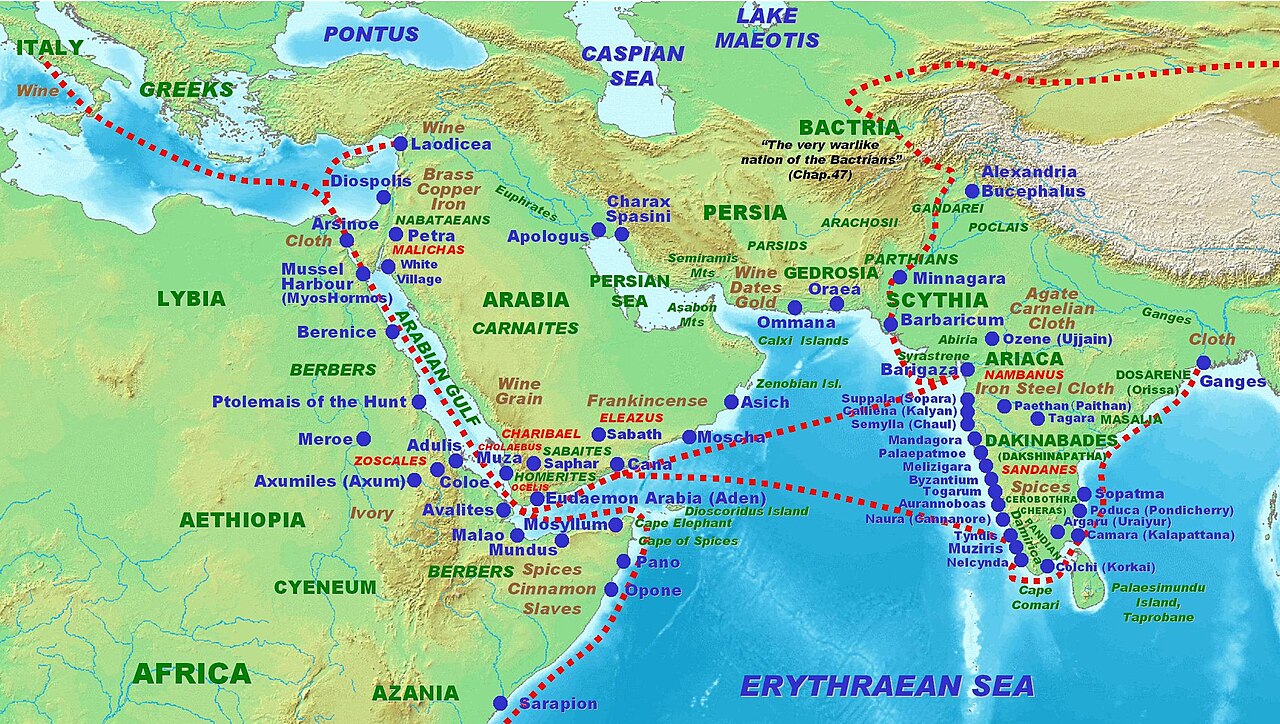
Roman trade in the subcontinent according to the Periplus Maris Erythraei 1st century CE (source : wikipedia)
법흥왕의 이름이 모즉지라 한다. (아래 내용) 외국어의 한자음이다. Mihiracula와 관련있는 것이 아닌가 판단된다.
"법흥왕(法興王, ? ~ 540년 7월, 재위: 514년 ~ 540년)은 신라의 제23대 임금이다. 성은 김(金)이고 이름은 원종(原宗) 또는 모즉지(牟卽智, 另卽智)[1][2][3], 진(秦)이다. 별칭으로는 모즉지매금왕(牟卽智寐錦王), 무즉지태왕(另卽智太王), 무력지태왕(另力智太王), 성법흥대왕(聖法興大王), 대성법왕(大聖法王), 모태왕(募泰王) 등이 있다. 본관은 경주(慶州)이며 지증왕과 연제부인(延帝夫人)의 아들이다. 그의 아호(雅號)는 법운(法雲)이며 불교 승려로서의 법명은 법공(法空)이다."
(자료 : 법흥왕, 위키백과, 인용출처 : 필자의 네이버 블로그(lainfos), 카테고리, 신라)
4. 신라의 동해와 인도의 벵갈만
신라가 가야가 있는 인도에 진출함에 따라, 신라 역사에서 말하는 동해가 혹시 벵갈만이 아닌가 하는 생각에 잠시 살펴 보고자 한다.
아래 자료를 보면 사사니언이 Sindh지역 (파키스탄 인더스강 하류지역)에 진출한 것은 Shapur I세(r 240-270)부터라 한다. Shapur II (r 307-379)시기에는 이 Sindh지역에 도시를 세웠다 한다.
"Sasanian rulers from the reign of Shapur I claimed control of the Sindh area in their inscriptions. Shapur I installed his son Narseh as "King of the Sakas" in the areas of Eastern Iran as far as Sindh.[48] Two inscriptions during the reign of Shapur II mention his control of the regions of Sindh, Sakastan and Turan.[49] Still, the exact term used by the Sasanian rulers in their inscription is Hndy, similar to Hindustan, which cannot be said for sure to mean "Sindh".[46] Al-Tabari mentioned that Shapur II built cities in Sind and Sijistan.[50][51]"
(source : History of Sindh, wikipedia, 인용출처 : 필자의 네이버 블로그(lainfos), 카테고리, 중세인도)
Shapur I세 시기는 신라의 첨해이사금(r 247-261)과 미추이사금(r 261-284)시기이다. 이시기에 아래 삼국사기에서 보는 것처럼 동해란 언급이 나온다. 이 동해는 인도의 벵갈만 우측을 가리키는 것이 아닌가 한다. 그렇다면 신라는 인도의 동쪽끝까지 진출한 셈이 된다. 상기 기록의 내용보다 더 엄청나다.
첨해이사금
十年春三月 동해에서 큰 물고기 세 마리가 나오다 (AD 256)
미추이사금
三年春二月 동쪽으로 순행하여 바다를 보다 (AD 263)
실성이사금 (r 402-417)
十五年春三月 동해 바닷가에서 뿔이 있는 큰 고기를 잡다 (AD 416)
Shapur II (307-379) 시기는 신라 홀해이사금 (310-356), 내물이사금 (356-402) 시기이다. 이 시기에는 동해에 대한 언급이 없다. 그러나 실성이사금(402-417) 시기에 동해 바닷가라는 구체적인 표현이 나온다.
상기 위키피디아 자료는 사산왕조가 Sindh지역을 점한 것으로 설명하는데, 인더스강을 바다로 인식하는 경우 신라의 동해는 이 지역이 된다.
그러나 인더스강이나 갠지스강이나 모두 Dauphin이 있었다 한다. Daulphin은 입이 뾰족한 모습을 하고 있어 뿔이 있는 모습이다.(아래 그림 참조) 따라서 실성이사금의 기록을 고려하면 동해는 뱅골만의 바닷가가 아닌가 한다.
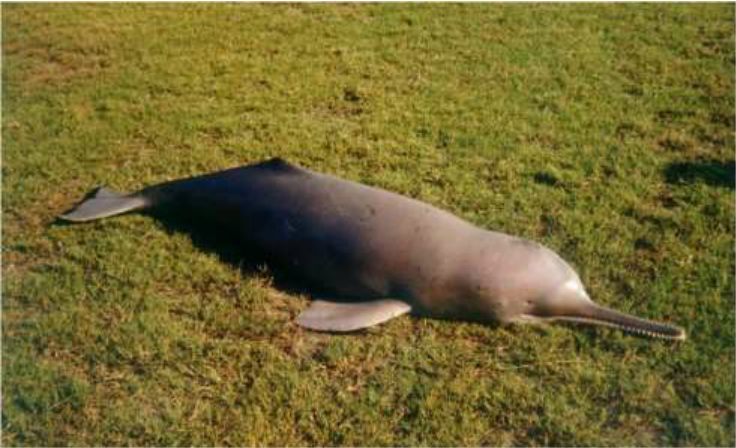
Gangetic plain의 daulphin (source : wikipedia)
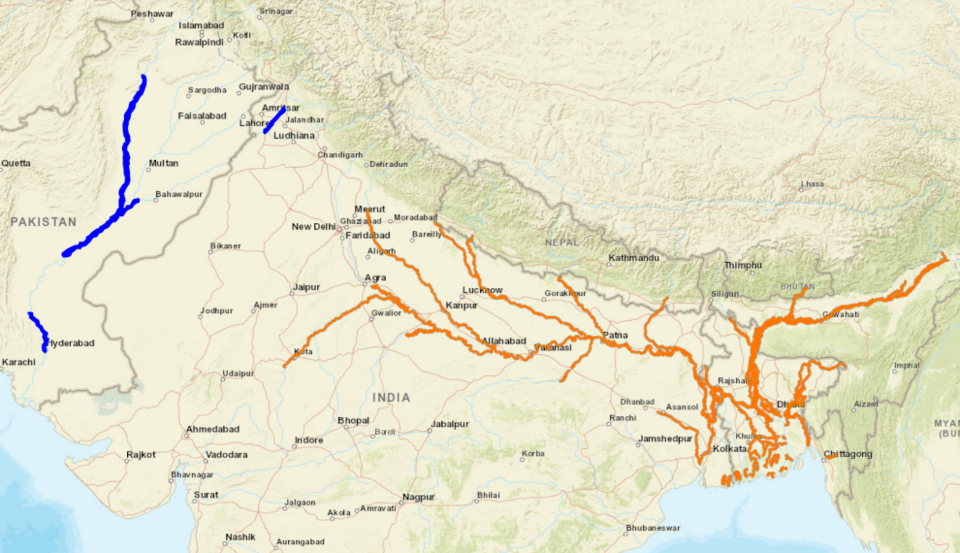
Ranges of the Indus river dolphin and Ganges river dolphin (source : wikipedia)
또한 로마에서 인도양을 거쳐 인도와 무역거래를 하는 시기에 바다와 강을 구분하지 못하는 일은 없을 것으로 판단된다. 따라서 동해를 바다로 본다면, 벵골만 동쪽의 바다가 될 수 있다. 이 경우 굽타왕국이 신라지역으로 되어야 하는데, 이에 대해 필자는 아직 연구하지 못했다.
다만 이글에서는 가야가 특히 대가야가 인도 동북부에 있었다는 것을 밝히는데 중점을 두고자 한다. 이제까지의 분석은 진흥왕 시기의 가야정벌이 북인도 나아가 동북부인도에까지 이를 수 있다는 것을 확인하고 넘어 간다.
우리는 지난 1편의 글에서 가야가 고깔모자를 쓴 사카, 스키타인이 아닌가 하였다. 그러면 북인도, 북동인도가 가야지역이라면, 이 지역이 사카나 스키타인의 세력이 있어야 한다. 이에 대한 검토는 다음 글에서 계속하고자 한다.
'한국의 역사 > 가야' 카테고리의 다른 글
| 대가야는 인도에 있었다 (I) (0) | 2026.06.06 |
|---|---|
| 금관가야는 지중해의 카르타고인가? (0) | 2023.01.29 |
| 김수로왕 부인 허황옥과 카르타고의 Dido 여왕 (0) | 2023.01.26 |
| 신라 지마이사금이 공격한 가야는 시실리에 있었는가? (0) | 2023.01.22 |